
Ovarian cancer symptoms diary
Peer reviewed by Patient clinician teamAuthored by Patient clinician teamOriginally published 10 Oct 2017
Meets Patient’s editorial guidelines
- DownloadDownload
- Share
- Language
- Discussion
- Audio Version
- Add to preferred sources on Google
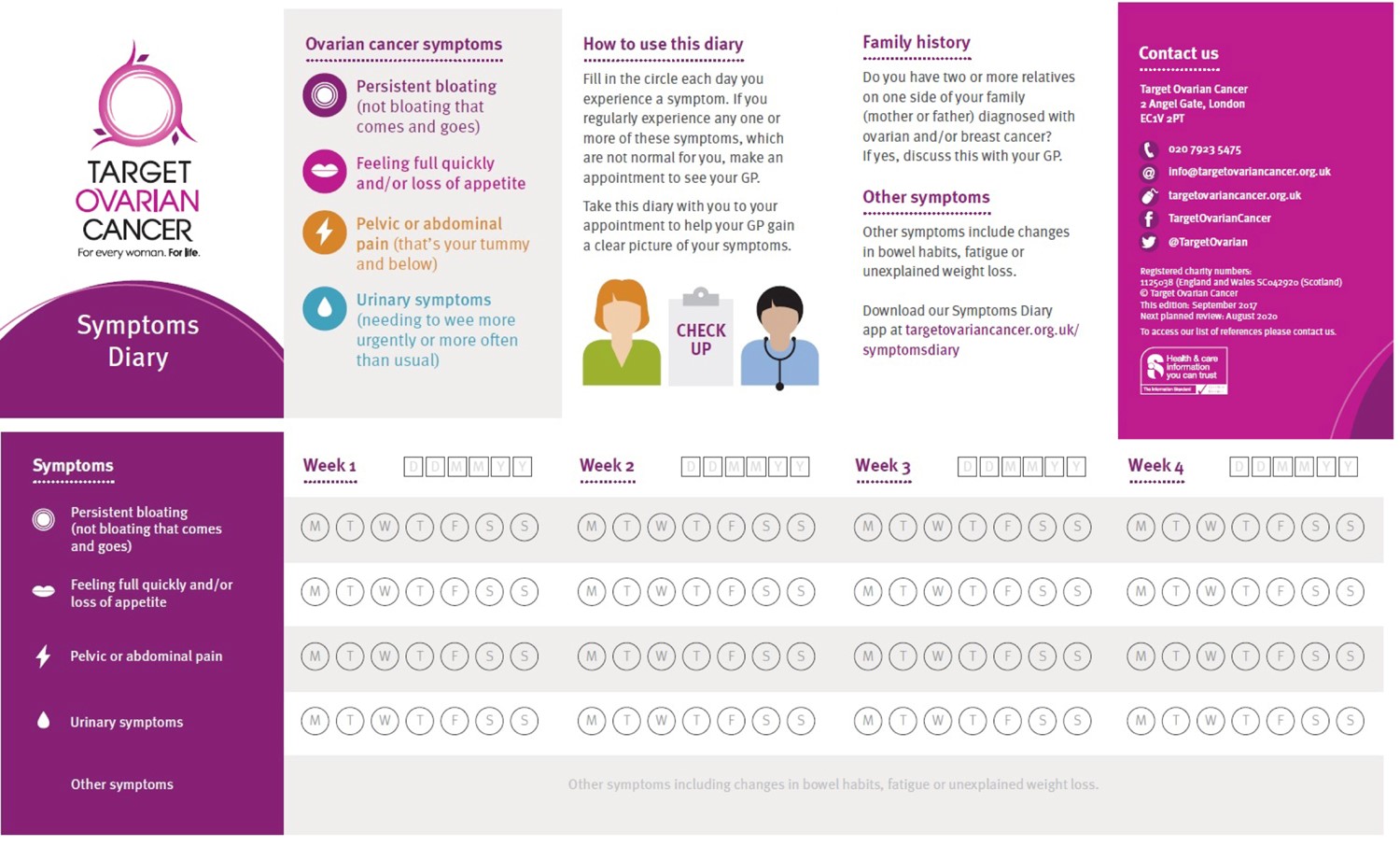
The ovarian cancer symptoms diary has been produced by Target Ovarian Cancer. This is a national ovarian cancer charity. It works to save lives and help women diagnosed with the condition live their lives to the full.
The diary is intended to provide an easy way for women who are concerned about ovarian cancer to accurately record symptoms for discussion with their doctor.
Ovarian cancer symptoms diary
Patient picks for Gynaecological cancer

Cancer
Women with physical disabilities denied access to smear tests
Two thirds of women who have a physical disability have been unable to attend a cervical screening.
by Milly Evans

Cancer
Smear test myths you need to stop believing
For the first time ever, Public Health England has launched a national campaign aimed at inspiring women to attend their cervical screening when they're invited, or make an appointment if they've been invited in the past and haven't gone.
by Dr Sarah Jarvis
About the authorView full bio

Patient clinician team
The Patient.info Clinical Team creates and reviews our health content to ensure it is accurate, evidence-based, and guided by trusted NHS and NICE standards.
About the reviewerView full bio
Patient clinician team
The Patient.info Clinical Team creates and reviews our health content to ensure it is accurate, evidence-based, and guided by trusted NHS and NICE standards.
Article history
Article also available in English, German, Spanish, French, Italian, Portuguese, Hindi, Hebrew, Arabic, and Swedish.
10 Oct 2017 | Originally published
Authored by:
Patient clinician teamPeer reviewed by
Patient clinician team
Join the conversation
Share your thoughts or experiences with others in our patient communities.

Ask, share, connect.
Browse discussions, ask questions, and share experiences across hundreds of health topics.

Feeling unwell?
Assess your symptoms online for free
Sign up to the Patient newsletter
Your weekly dose of clear, trustworthy health advice - written to help you feel informed, confident and in control.
By subscribing you accept our Privacy Policy. You can unsubscribe at any time. We never sell your data.
More in cancer
- Being a 'morning person' lowers risk of breast cancer
- Blood test may detect ovarian cancer two years earlier
- Can burnt toast really cause cancer?
- Can your diet reduce the risk of cancer?
- Cancer myths you need to stop believing
- Coping with grief after losing a loved one to lung cancer
- Friendly' bacteria in the vagina could protect against ovarian cancer
- How cancer can affect your sex life
- New insight into breast cancer risk after stopping HRT
- Personalised blood test detects return of breast cancer
- Smear test myths you need to stop believing
- Tips to beat bowel cancer
- Vitamin D could cut risk of dying from cancer
- What affects your chances of surviving cervical cancer?
- What are the common myths and facts about cervical screening?
- What is cancer 'prehabilitation'?
- What not to say to someone who is dying
- What to expect during a breast screening
- What you need to know about end of life care
- Women with physical disabilities denied access to smear tests