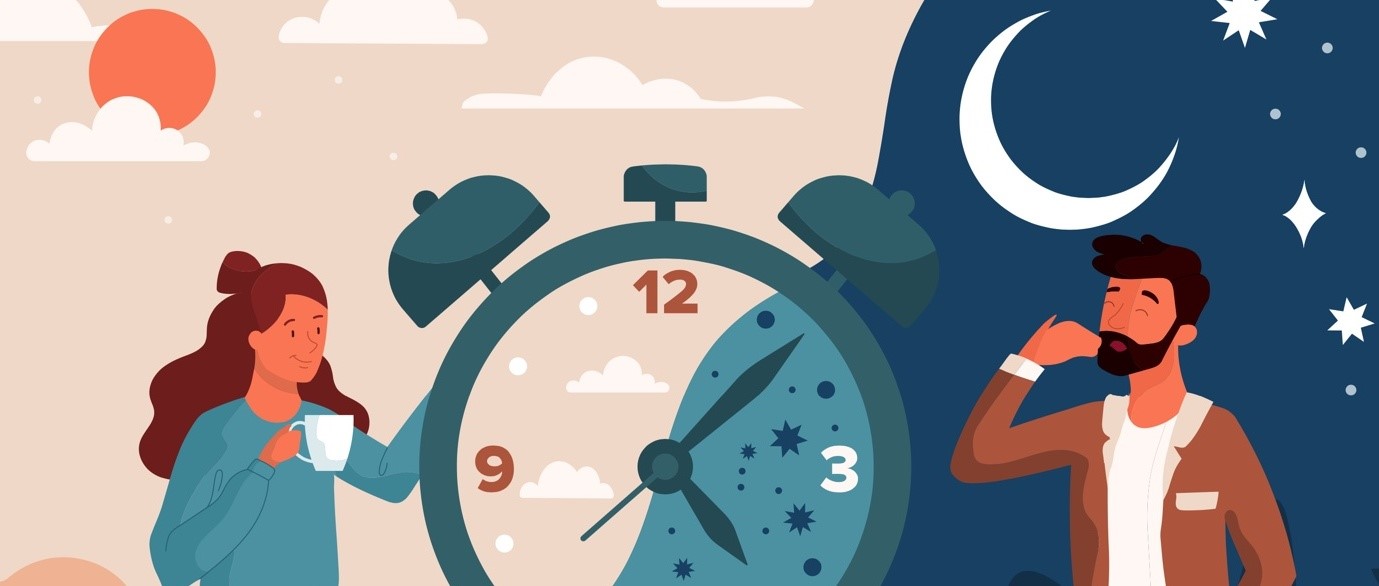
How to fix your sleep schedule with a healthy bedtime routine
Peer reviewed by Dr Krishna Vakharia, MRCGPLast updated by Lawrence HigginsLast updated 26 Aug 2024
Meets Patient’s editorial guidelines
- DownloadDownload
- Share
- Language
- Discussion
- Audio Version
- Add to preferred sources on Google
A good sleep schedule helps you get the right amount of rest each night and stops you building up a 'sleep debt' that leaves you not feeling at your best. What makes a good sleep schedule, and how does a healthy bedtime routine help you to adopt one?
Why is a sleep schedule so important?
As you sleep, your body repairs and restores itself, and your brain consolidates memories and retains useful information.
But what's the perfect amount of sleep? The short-term effects of lack of sleep, can cause slower reactions and brain fog to irritability and low mood. Research, shows that lack of sleep is associated with poor heart health and poor mental health. But too much sleep is also linked to health issues.
What is a good sleep schedule?
A good sleep schedule or bedtime routine helps you get the right amount of rest. UKCP psychotherapist Heather Darwall-Smith explains: "On average, adults need 7-9 hours of sleep a night. Making sure you have enough time to get the sleep you need is the first step to improving sleep."
Your body clock
Every cell in your body has a biological clock which keeps near perfect time as it is aligned with the near 24-hour cycle of light and dark. Known as circadian rhythms, this tells your body when to eat or sleep.
This timing is biological and is fundamental to managing how much sleep you need as well as the timing. It aligns with a second process - sleep pressure - which needs to be high to make you sleepy, and together they create a sleep window which is your ideal time to sleep.
Adopting a sleep schedule that wakes you up at the same time each day is one effective way of keeping your internal clock on track.
What's your sleep debt?
According to Darwall-Smith, lots of us carry a huge 'sleep debt', meaning we're functioning on less sleep than we need to feel at our best. The tricky thing is, this doesn't always mean our lights are out before heads hit pillows each night. We can still struggle to fall asleep, get back to sleep, or find ourselves waking too early.
Darwall-Smith says:
A typical sleep pattern that is easily fixed looks like this:
Monday-Thursday: bedtime 12.00 pm, fall asleep around 1 am having been on phone, up at 7 am.
Friday-Saturday: bedtime 1-2 am, up at 9 am.
Sunday: bedtime 9 pm but can't get to sleep, up at 7 am.
The potential issues here are as follows:
Monday-Thursday: getting approximately six hours of sleep a night but in need of 7.5 hours. This creates a sleep debt of six hours over the four days.
Friday-Saturday: a late night and a lie-in results in seven to eight hours sleep. This will pay off the sleep debt, right? No, a sleep debt has to be paid off slowly. You can't recoup what you have missed by lying in. For many people, the late nights also include alcohol, which disrupts sleep quality, so the debt remains.
Sunday night: an attempt to get more sleep means you go to bed early. However, there might not be enough sleep pressure, so despite being tired, you're not sleepy enough to fall asleep - you are trying to work against your biological sleep process.
Monday morning: you're waking up a couple of hours earlier than the previous two days. It's like giving yourself jetlag - the circadian rhythm is misaligned, and you feel terrible.
Is this situation familiar? Darwall-Smith describes this as a combination of social jetlag and sleep debt.
"This can be sorted by instigating a consistent wake time - give or take 15 minutes - even if you've had a late night the previous evening. Allow yourself the time you need to get enough sleep but don't try to get too much - this won't work."
Tips for correcting a poor sleep schedule
Resetting your sleep schedule may sound straightforward on paper, but creating a new, healthy bedtime routine can be tricky, especially when we want to adjust the time of evening we start feeling sleepy.
This is why it's important to address any 'poor sleep hygiene' habits - activities that can seriously affect your ability to fall asleep. Darwall-Smith has some tips on forming healthy sleep habits:
Understand the importance of consistency but don't become obsessive - good sleep is an averaging out of a positive sleep routine and the right amount of sleep versus not perfect sleep. It's not possible to get a perfect night's sleep every night.
Dim or turn off the lights near bedtime - your brain is expecting darkness, so bright light exposure during night-time confuses your circadian rhythms and reduces melatonin production, which can make it hard to fall asleep or reduce sleep quality.
Don't eat too late - eating within three hours of your bedtime routine is associated with disturbed sleep as it confuses your internal clock and inhibits digestion of food.
Address your stress - cortisol, the stress hormone, can keep you awake. Darwall-Smith advises allowing time for regular rest and relaxation in your day.
Exercise during the day - moving more will help increase your sleep pressure but be mindful of exercise too close to bedtime. Your body needs to cool down to help you sleep and an intense session is also likely to spike your stress hormones. Experts recommend a minimum 1- to 2-hour gap before bed.
Can an 'all-nighter' fix your sleep schedule?
Different methods work for different people, but Darwall-Smith says that it takes time for your biological clock to come back into sync. She also cautions that resisting sleep for one whole night puts you at high risk of drowsy driving or lapsed attention. "If pulling an all-nighter, don't drive, operate machinery, or make significant decisions. It is likely to take a couple of days to recover."
How long does it take to get used to a new sleep schedule?
This can take around two weeks, in Darwall-Smith's experience. It's important to trust that your internal clock will adapt, which will gradually make your new bedtime routine and schedule a lot easier, and eventually become second nature.
Patient picks for Sleep and insomnia

Healthy living
What's the right temperature for sleep?
We all like to snuggle down under a warm duvet on a cold night, but did you know that having your bedroom too warm might be stopping you from getting to sleep?
by Dr Jan Sambrook, MRCGP
Healthy living
Do teenagers really need more sleep?
As they go through their teenage years, teens have increasing responsibilities at school and at home, their social lives are expanding, they become more independent and they’re busy making plans and working hard for their future. It is also a time of enormous personal physical, emotional and intellectual development.
by Dr Colin Tidy, MRCGP
About the authorView full bio

Amberley Davis
Senior writer
BA (Hons), CPD
Amberley is a senior writer with Patient and has written extensively on a range of health and wellbeing topics.
About the reviewerView full bio

Dr Krishna Vakharia, MRCGP
Chief Medical Officer for Health, Optum UK
MBChB, MRCGP(2013), BMedSci (hons), DFSRH, DRCOG, PGDipDerm (Distn)
Dr Krishna Vakharia is an NHS GP. She is also a regular examiner for the postgraduate Diploma in Practical Dermatology at Cardiff University as well as being the Chief Medical Officer for health at Optum UK.
Article history
Article also available in English, German, Spanish, French, Italian, Portuguese, Hindi, Hebrew, Arabic, and Swedish.
Next review due: 30 Aug 2027
26 Aug 2024 | Latest version
30 Sept 2022 | Originally published
Authored by:
Amberley Davis
Join the conversation
Share your thoughts or experiences with others in our patient communities.

Ask, share, connect.
Browse discussions, ask questions, and share experiences across hundreds of health topics.

Feeling unwell?
Assess your symptoms online for free
Sign up to the Patient newsletter
Your weekly dose of clear, trustworthy health advice - written to help you feel informed, confident and in control.
By subscribing you accept our Privacy Policy. You can unsubscribe at any time. We never sell your data.
More in healthy living
- Can fitness trackers help boost activity levels in adults?
- NewCraving some cosy? The science of autumn nesting
- Debunking bisexual stereotypes and myths
- Does apple cider vinegar help with weight loss?
- How to become more flexible
- How to control your drinking at a work Christmas party
- How to do Pilates at home
- How to get over your fear of exercise
- How to look after your mental health this winter
- Is running bad for your knees?
- More evidence that social media is associated with teenage depression
- More than just entertainment: Jeanie Y. Chang on K-dramas and mental health
- Parental burnout: your guide to understanding and overcoming it
- The health benefits of stretching every day
- What are the risks of alcohol as you get older?
- What is 'Skinnymaxxing' - and why are health experts concerned about it?
- What is cortisol belly? Why stress could be making it harder to lose belly fat
- What to do if you're struggling with your mental health at Christmas
- What to do when you're waiting for drug or alcohol services
- When is your child too sick for school?