Do any traditional or herbal remedies work for flu?
Peer reviewed by Dr Sarah JarvisAuthored by Ellie BroughtonOriginally published 3 Nov 2020
Meets Patient’s editorial guidelines
- DownloadDownload
- Share
- Language
- Discussion
- Audio Version
- Add to preferred sources on Google
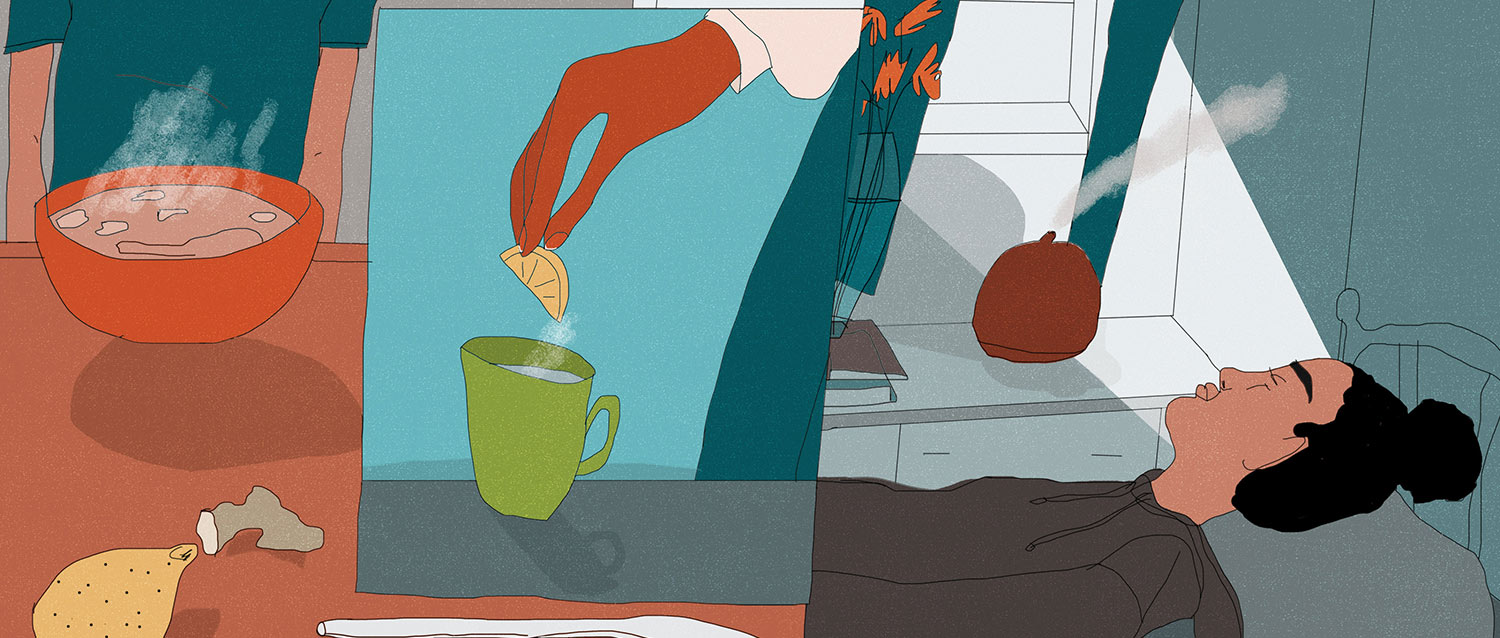
Advice for flu treatment is, and has always been, simply 'fluids and bed rest' - little wonder some of us turn to family recipes or alternative medicine to get creative with our approach. A virologist and a GP explain which traditional and herbal remedies work for flu, and why.
Feature illustrated by Hannah Buckman.
Dr Gavin Jamie is a GP in Swindon and he says that lots of traditional or herbal remedies are safe and helpful. For example, some of his South Asian patients use Ayurvedic medicine as well as Western.
Remedies like turmeric milk and ginger tea are in part good for flu because they fall within advice to stay hydrated. Dr Jamie says kitchen remedies like chicken soup, honey and garlic are all fine.
"Anything you would normally eat or drink is safe," he says. "Plus, anything aromatic will help clear congestion in your nose."
He advises that it's common to lose your appetite with a flu, as with any infection that affects your senses of taste and smell, so drink anything that appeals.
You don't need to chug litres and litres of water - tea and coffee are fine (up to 400 mg caffeine - about eight cups of tea or four cups of brewed coffee - a day), as are soups, broths and fruit juices. Raw fruit and vegetables also help you stay hydrated. Avoid alcohol - it dehydrates you - and as normal, mind your sugar and caffeine intake.
Stay hydrated
Steam inhalation is good for keeping your respiratory tract moist and hydrated, and adding essential oils is absolutely fine.
"It's the water vapour that is good for you," he explains. "But using essential oils or eucalyptus might make you inhale a bit more deeply."
Why do I need to stay hydrated?
Dr James Harker is a virologist at Imperial College London. He says that advice about fluids is still the best advice for any infection that gives you a fever.
"A fever is the way the body tries to prevent a virus replicating," he explains. "But when your temperature goes up, people sweat more, and often if the fever raises their blood pressure they urinate more too."
Drinking fluids helps all the systems that fight the flu work harder. "Dehydration is bad because the less fluid your body has, the thicker the mucus in your mouth, nose and throat and the worse it is at protecting your respiratory system from the infection. Likewise, the more dehydrated our lymph system becomes - where our immune cells travel - the slower and worse that system becomes."
In short, drinking lots is a multitasking activity: "Staying hydrated - that is, keeping your bodily fluids at a proper volume - allows the movement of cells that protect you against infection, and molecules that repair your lungs after the infection has been cleared."
Get some rest
Like staying hydrated, Dr Harker explains, getting bed rest is good for a couple of reasons.
"Lying down helps you to clear mucus and stops it falling down into your lungs," he says. "If you've got the flu, you're going to be lethargic."
Not only is resting good for you, but exerting yourself slows down your recovery. "When you have a fever, the last thing you want to do is exert yourself and further increase your body temperature. It's going to dehydrate you faster and make it harder for you to breathe."
If you can sleep, great - but simply resting in bed (ie lying down, not working) is fine.
Alternative medicine
Alternative approaches like homeopathy don't have any strong evidence basis (if any evidence at all). There is often no harm in taking homeopathic remedies, but there is also no point. For that reason, your doctor is unlikely to mind either way, but they're certainly unlikely to recommend them.
"Homeopathy is high on the list of things that do nothing but are probably safe," Dr Jamie says.
Echinacea is a popular herbal supplement and again, Dr Jamie says it's fine for most patients to take.
Some people advise taking willow extract for flu but Dr Jamie advises caution. Medicines that mention willow extract might contain salicylates (also found in aspirin) which are not suitable for children or people with asthma and a number of other conditions.
Antibiotics don't work
One last thing: in case you hadn't already heard, antibiotics don't work on the flu, or any viral infections - if they did, coronavirus would have been a whole different story.
"Antibiotics do not touch the flu at all," Dr Gavin Jamie explains. "They're not going to shorten the course of the flu, and they're potentially going to create side effects such as stomach troubles."
In a few rare cases people can get a bacterial infection on top of flu - for example, pneumonia. Dr Jamie advises that if the flu gets worse, rather than better, after a few days, to contact your doctor to check your symptoms.
Patient picks for Flu and vaccination
Infections
What are the most effective flu prevention methods?
Maybe you've never had flu, even when everyone you knew was coming down with it. Maybe you've had flu and can't see what all the fuss was about. So when do you need to worry about flu and what are the most effective flu prevention methods? ?
by Dr Sarah Jarvis

Infections
How to book your flu jab before winter
Winter is coming and with it comes an increased risk of catching flu. Flu can leave many of us feeling dreadful and bedridden for days, but for some people, the effects can be more severe or even life-threatening. Getting your flu jab is the best way to protect yourself and others - and here’s how to get yours.
by Lydia Smith
About the author
Authored by

Ellie Broughton
About the reviewerView full bio

Dr Sarah Jarvis
Clinical Consultant
MA (Cantab), BM, BCh (Oxon), DRCOG, FRCGP, MBE
After training in medicine at Cambridge and Oxford, Dr Sarah Jarvis MBE became a GP.
Join the conversation
Share your thoughts or experiences with others in our patient communities.

Ask, share, connect.
Browse discussions, ask questions, and share experiences across hundreds of health topics.

Feeling unwell?
Assess your symptoms online for free
Sign up to the Patient newsletter
Your weekly dose of clear, trustworthy health advice - written to help you feel informed, confident and in control.
By subscribing you accept our Privacy Policy. You can unsubscribe at any time. We never sell your data.