neutrophil cytosolic factor 2
Last updated 8 May 2023
Meets Patient’s editorial guidelines
- DownloadDownload
- Share
- Language
- Discussion
- Audio Version
- Add to preferred sources on Google
The NCF2 gene provides instructions for making a protein called neutrophil cytosolic factor 2 (also known as p67-phox). This protein is one part (subunit) of a group of proteins that forms an enzyme complex called NADPH oxidase, which plays an essential role in the immune system. Specifically, NADPH oxidase is primarily active in immune system cells called phagocytes. These cells catch and destroy foreign invaders such as bacteria and fungi. NADPH oxidase is also thought to regulate the activity of immune cells called neutrophils. These cells play a role in adjusting the inflammatory response to optimize healing and reduce injury to the body.
Normal function
The NCF2 gene provides instructions for making a protein called neutrophil cytosolic factor 2 (also known as p67-phox). This protein is one part (subunit) of a group of proteins that forms an enzyme complex called NADPH oxidase, which plays an essential role in the immune system. Specifically, NADPH oxidase is primarily active in immune system cells called phagocytes. These cells catch and destroy foreign invaders such as bacteria and fungi. NADPH oxidase is also thought to regulate the activity of immune cells called neutrophils. These cells play a role in adjusting the inflammatory response to optimize healing and reduce injury to the body.
The presence of foreign invaders stimulates phagocytes and triggers the assembly of NADPH oxidase. This enzyme participates in a chemical reaction that converts oxygen to a toxic molecule called superoxide. Superoxide is used to generate several other compounds, including hydrogen peroxide (a strong disinfectant) and hypochlorous acid (the active ingredient in bleach). These highly reactive, toxic substances are known as reactive oxygen species. Phagocytes use these substances to kill foreign invaders, preventing them from reproducing in the body and causing illness.
Conditions referring to this gene or chromosome
Other names
NADPH oxidase activator 2
NCF-2
NCF2_HUMAN
neutrophil cytosol factor 2
NOXA2
P67-PHOX
P67PHOX
Related patient information and medicines
Patient information leaflet
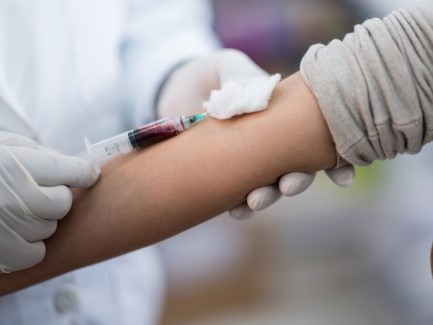
Blood tests
Millions of red blood cells are made each day. Red cells contain a chemical called haemoglobin. This binds to oxygen and takes oxygen from the lungs to all parts of the body. White cells (leukocytes) There are different types of white cells which are called neutrophils (polymorphs), lymphocytes, eosinophils, monocytes and basophils. They are part.
Patient information leaflet
Polycythaemia rubra vera
Blood cells, which can be seen under a microscope, make up about 40% of the blood's volume. Blood cells are divided into three main types: Red cells (erythrocytes). These ... This binds to oxygen and takes oxygen from the lungs to all parts of the body. White cells (leukocytes). There are different types of white cells, which are called.

Patient information leaflet
The immune system
This leaflet gives a brief overview of the immune system and how it works. A person with a weak immune system might have difficulty fighting off infections. In autoimmun... If pathogens manage to get through these barriers, they encounter special white blood cells present in your bloodstream. There are different types of white cells, called.

Patient information leaflet
Chronic myeloid leukaemia
Chronic myeloid leukaemia (CML) is sometimes called chronic myelogenous leukaemia, chronic granulocytic leukaemia, or chronic myelocytic leukaemia. What is chronic myeloid leukaemia. CML develo... The abnormal stem cell multiplies and the cells that are made from the abnormal stem cells mature and develop into near-normal white cells - mainly.

Patient information leaflet
Childhood leukaemias
One drop of blood contains about five million re... Red cells contain a chemical called haemoglobin. This binds to oxygen and takes oxygen from the lungs to all parts of the body. White cells (leukocytes). There are different types of white cells, which are called neutrophils (polymorphs), lymphocytes, eosinophils, monocytes and basophils. They.

Patient information leaflet
Blood clotting tests
Blood clotting tests are used to diagnose and assess bleeding problems and to monitor people who take warfarin or other anticoagulant medicines. You may be advised to have blood clotting tests: If you have a suspected bleeding disorder. For example, if you bleed a lot after cuts, or if you bruise easily. If you have certain liver diseases that can.
Further reading and references
- neutrophil cytosolic factor 2; MedlinePlus, National Library of Medicine.
- Cunninghame Graham DS, Morris DL, Bhangale TR, Criswell LA, Syvanen AC, Ronnblom L, Behrens TW, Graham RR, Vyse TJ. Association of NCF2, IKZF1, IRF8, IFIH1, and TYK2 with systemic lupus erythematosus. PLoS Genet. 2011 Oct;7(10):e1002341. doi: 10.1371/journal.pgen.1002341. Epub 2011 Oct 27.
- Jacob CO, Eisenstein M, Dinauer MC, Ming W, Liu Q, John S, Quismorio FP Jr, Reiff A, Myones BL, Kaufman KM, McCurdy D, Harley JB, Silverman E, Kimberly RP, Vyse TJ, Gaffney PM, Moser KL, Klein-Gitelman M, Wagner-Weiner L, Langefeld CD, Armstrong DL, Zidovetzki R. Lupus-associated causal mutation in neutrophil cytosolic factor 2 (NCF2) brings unique insights to the structure and function of NADPH oxidase. Proc Natl Acad Sci U S A. 2012 Jan 10;109(2):E59-67. doi: 10.1073/pnas.1113251108. Epub 2011 Dec 27.
- Kannengiesser C, Gerard B, El Benna J, Henri D, Kroviarski Y, Chollet-Martin S, Gougerot-Pocidalo MA, Elbim C, Grandchamp B. Molecular epidemiology of chronic granulomatous disease in a series of 80 kindreds: identification of 31 novel mutations. Hum Mutat. 2008 Sep;29(9):E132-49. doi: 10.1002/humu.20820.
- Roos D, Kuhns DB, Maddalena A, Bustamante J, Kannengiesser C, de Boer M, van Leeuwen K, Koker MY, Wolach B, Roesler J, Malech HL, Holland SM, Gallin JI, Stasia MJ. Hematologically important mutations: the autosomal recessive forms of chronic granulomatous disease (second update). Blood Cells Mol Dis. 2010 Apr 15;44(4):291-9. doi: 10.1016/j.bcmd.2010.01.009. Epub 2010 Feb 18.
- Stasia MJ, Li XJ. Genetics and immunopathology of chronic granulomatous disease. Semin Immunopathol. 2008 Jul;30(3):209-35. doi: 10.1007/s00281-008-0121-8. Epub 2008 May 29.
- Sumimoto H. Structure, regulation and evolution of Nox-family NADPH oxidases that produce reactive oxygen species. FEBS J. 2008 Jul;275(13):3249-77. doi: 10.1111/j.1742-4658.2008.06488.x. Epub 2008 May 30.
Join the conversation
Share your thoughts or experiences with others in our patient communities.

Ask, share, connect.
Browse discussions, ask questions, and share experiences across hundreds of health topics.
Sign up to the Patient newsletter
Your weekly dose of clear, trustworthy health advice - written to help you feel informed, confident and in control.
By subscribing you accept our Privacy Policy. You can unsubscribe at any time. We never sell your data.