
Becoming Dad - the identity shift nobody really talks about
द्वारा सहकर्मी समीक्षा की गई Dr Colin Tidy, MRCGPद्वारा लिखित Laura Greenwoodमूल रूप से प्रकाशित 3 Nov 2026
मरीज की संपादकीय दिशानिर्देशों
- डाउनलोडडाउनलोड
- साझा करें
- Language
- चर्चा
- Ask Patient
- ऑडियो संस्करण
- Google पर पसंदीदा स्रोतों में जोड़ें
Becoming a father changes your life. But have you ever stopped to consider how it might shape you as a person?
We talk a lot about the sleepless nights and new responsibilities when a baby arrives. But something we don't talk about nearly enough is what happens to a man's sense of identity, sense of self, when he becomes a father.
In my work as a psychotherapist supporting parents and families, I've seen just how profound this transition from being a man and evolving into a father can be.
Yet so often, dads and their struggles in fatherhood go unnoticed, unspoken about. Too busy focusing on their partner, their baby, and everyone else's needs to stop and consider their own. Because men have been conditioned to be the ones who hold everything together. That this is their role in life. To be the steady presence and provider that others need them to be.
But what if this is exactly what is contributing to our shocking male suicide statistics? What if this is contributing to the toxic masculinity being called out more in the media right now? What if this is what prevents our little boys, who turn into men, from knowing their needs and wellbeing matter just as much as everyone else’s? What if it stops them from recognising and prioritising what will help them become the men and fathers they want to be, rather than holding them back?
This, is the narrative I am here to change.
Patrescence - the transformation of becoming a father
There's a term for the transition men go through as they enter into and move through fatherhood - patrescence.
Much like matrescence, which describes the transformation women experience when becoming mothers, patrescence refers to the emotional, physical, psychological, and social changes men can experience as they enter fatherhood.
It shifts your priorities, relationships, values, and sense of who you now are in this changing life. You might find yourself becoming more emotionally sensitive, anxious, irritable, or questioning things that never particularly bothered you before.
You might even find yourself asking: "Who am I now that I'm a dad?". You might find yourself feeling vulnerable. Like you have no idea how to show up in this role, and that vulnerability scares the hell out of you.
These feelings don't mean you are not a good father. They are natural responses that occur as you adjust to one of the biggest identity transitions of your life.
In all my 18 years in the mental health industry, I have seen no greater life transition than parenthood, to bring up emotional and psychological challenges for you to face. But I am here to tell you, these challenges, while hard, give you the biggest opportunity of your life, to overcome them.
Why is this?
Well, because as fathers, you are not only doing this for you. You are doing this, for your children. This is what brings parents to my psychotherapy clinic for support. The strong desire to work on themselves to show up as their best selves, for their children.
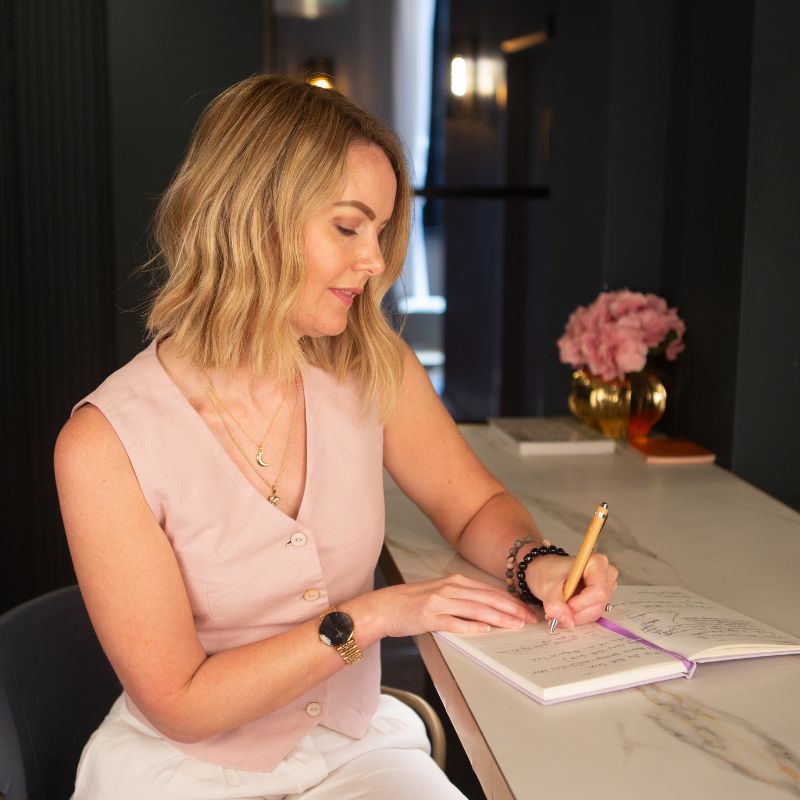
Laura Greenwood
When fatherhood brings up your own childhood
One of the things I often see in therapy is how becoming a parent can bring our own childhood experiences into sharper focus.
Suddenly, you're not just thinking about the father you want to be. You're reflecting on the father you had. On the parenting you experienced. Perhaps you recognise things from your childhood that you want to recreate, or things you wish had been different.
This can bring up a complex mixture of emotions including sadness, grief, resentment, anger, anxiety, and past experiences you thought you had long forgotten. You might become more acutely aware of emotional needs that weren't met, or patterns of behaviour you've carried into adulthood without realising. Patterns that you can see were developed in childhood, that may not suit your life and what you need and want now.
Fatherhood can hold up a mirror to parts of ourselves we haven't considered for years, if ever.
Different stages of fatherhood may be more challenging, because at that phase of our child’s life, it was a particularly challenging time in our own childhood.
Recognising these patterns gives us an opportunity to make conscious choices about what we want to pass on to our children and what we'd rather leave behind.
It's OK to miss your life before children
Here's something I really want dads to hear - you can absolutely love being a father and still miss your life before children.
You might miss your freedom, spontaneity, friendships, hobbies, or simply having more time to yourself, not being needed by a little person or people.
I know acknowledging that can bring guilt. A sense that you should not be feeling this way and should just get on with your new life that exists now. But adjusting to parenthood can involve a genuine sense of loss for the life and identity you had before.
When we don't allow ourselves to acknowledge those feelings, they can sometimes emerge as frustration, resentment, irritability, or emotional withdrawal.
Missing parts of your old life doesn't mean you love your child any less. It means you are human. In order to accept, love, and embrace the life you have now, it is important to grieve to let go of the life you once had.
The mental and physical pressures of fatherhood
Becoming a dad can also affect your mental and physical wellbeing. Sleep deprivation, increased responsibilities, relationship changes, and financial pressures can all take their toll.
Some fathers experience anxiety, overwhelm, depression, burnout, a feeling of disconnection from yourself, your life and others, during the transition to parenthood. Yet men's mental health can be overlooked when attention is focused on the mother and baby. And often, men don't recognise their own distress, because they have never been taught how to.
Instead of describing themselves as anxious or low, they may become irritable, withdraw from others, or throw themselves into work. Work can feel familiar and manageable, while fatherhood can feel unpredictable and vulnerable.
For men who have grown up believing they should always be strong, capable, and in control, that vulnerability can be particularly uncomfortable - and something they work very hard to avoid.
Dads' mental health matters, not just because of the impact on their families, but because men deserve emotional support in their own right.
Being the dad you want to be
We're living through a period of change in how we experience and understand fatherhood.
For me, this is an exciting time to be a parent, but it is also uncertain and unfamiliar. The path ahead unclear. Which, for a human race culture that has been taught that control means safety - and uncertainty means fear - we tend to avoid it like the plague.
So often in my work, my job is to trust the process for you until you feel ready to trust it yourself.
Many dads want to be more emotionally present, nurturing, and involved in everyday parenting. Yet traditional expectations around providing financially, career progression, and masculinity can create conflicting pressures.
You might feel pulled between being successful at work, supporting your partner, being present for your children, and maintaining some sense of yourself. But there isn't one right way to be a father. Or a man, for that matter. You have an opportunity to decide what kind of dad you want to be, rather than simply following the expectations you've inherited.
And in doing so, you're modelling something important for the next generation - that men can be emotionally open, nurturing, vulnerable, and strong. That men’s emotional and psychological needs matter as much as everyone else’s. That it is ok and beneficial for the individual and the whole to ask for and gain support.
Looking after yourself through the transition
If you're navigating this identity shift, I'd encourage you to:
Give yourself permission to feel - joy, love, frustration, grief, and uncertainty can all coexist.
Get curious about yourself - what has changed? What matters to you now? What kind of father do you want to be?
Find safe spaces to talk - whether that's your partner, friends, other dads or a therapist, you deserve to feel heard.
Remember your needs matter too - your identity, friendships, interests, and wellbeing don't stop being important because you've become a parent.
Work as a team - you and your partner may be experiencing very different transitions. Open communication and understanding can help you navigate them together.
A final thought
I believe we are a generation of change-makers when it comes to parenthood. We're challenging traditional expectations, recognising the importance of fathers' emotional wellbeing, and creating opportunities for men to show up differently for themselves and their children.
And while the systems and attitudes around us haven't always caught up, these conversations matter. Because fatherhood isn't just about raising a child. It's also about the person you become along the way.
From experience working with so many fathers. I know that person is particularly special, in their own unique way. And perhaps one of the most important things we can show our children is that growing, changing, expressing emotions, and looking after our own wellbeing are all part of what it means to be human.
Laura Greenwood is an Accredited Psychotherapist and Founder of Laura Greenwood Therapy, a specialist psychotherapy and wellbeing clinic supporting parents, children, and families through the emotional and psychological challenges of parenthood.
Find out more at www.lauragreenwoodtherapy.com.
रोगी के लिए चयन General men's health
मानसिक स्वास्थ्य
माता-पिता का थकान: इसे समझने और इससे उबरने के लिए आपकी मार्गदर्शिका
पालन-पोषण अक्सर जीवन की सबसे पुरस्कृत भूमिकाओं में से एक होता है - लेकिन यह सबसे कठिन भी होता है। किसी अन्य मानव की देखभाल करना, चाहे वह बच्चा हो या किशोर, समय, ऊर्जा और भावनात्मक शक्ति की निरंतर आपूर्ति की मांग करता है। खुशी वास्तविक है, लेकिन चुनौतियाँ भी हैं। एक मनोचिकित्सक की अंतर्दृष्टि के साथ, हम माता-पिता के थकावट को पहचानने के लिए सुझाव साझा करते हैं - साथ ही इसे संबोधित करने और रोकने के लिए कुछ व्यावहारिक कदम।.
विक्टोरिया रॉ द्वारा

मानसिक स्वास्थ्य
पूरी तरह 'सामान्य नहीं': महामारी के बाद परिवारिक उपचार के लिए एक मार्गदर्शिका
जब 2019 के अंत में एक वायरस के तेजी से दुनिया भर में फैलने की खबर आई, तो 'अभूतपूर्व' शब्द जल्दी ही आने वाले महीनों में रोजमर्रा की शब्दावली का हिस्सा बन गया। कोविड-19 का प्रकोप कम से कम एक सदी में दुनिया का सबसे महत्वपूर्ण सार्वजनिक स्वास्थ्य संकट था, जिसने उस जगह की नींव को हिला दिया जहां हम आमतौर पर सबसे सुरक्षित महसूस करते हैं - घर। यह कोई आश्चर्य की बात नहीं है कि वर्षों की बाधित दिनचर्या ने परिवार इकाई पर एक स्थायी छाप छोड़ी है। समर्थन नेटवर्क के अचानक नुकसान से लेकर घर, स्कूल और काम के बीच की सीमाओं के धुंधलेपन तक, महामारी ने परिवारों के काम करने के तरीके को बदल दिया। हमने एक मनोचिकित्सक से बात की ताकि इन दीर्घकालिक मनोवैज्ञानिक प्रभावों का पता लगाया जा सके और यह समझने के लिए कि उस अवधि पर विचार करना क्यों आवश्यक है - और आज परिवार की गतिशीलता को समझने और ठीक करने के लिए।.
विक्टोरिया रॉ द्वारा
लेखक के बारे मेंपूरा जीवन परिचय देखें
द्वारा लिखित

Laura Greenwood
मनोचिकित्सक
BABCP Accredited CBT & EMDR Therapist
Laura Greenwood is a BABCP Accredited Psychotherapist, speaker, writer, and parental mental health activist with over 18 years' experience in the mental health field, including more than a decade working within the NHS. As Founder and Clinical Lead of the multi-award-winning Laura Greenwood Therapy, she specialises in the mental health and wellbeing of parents, children, and families - bringing deep clinical expertise alongside her own lived experience of parenthood.
समीक्षक के बारे मेंपूरा जीवन परिचय देखें

Dr Colin Tidy, MRCGP
सामान्य चिकित्सक, चिकित्सा लेखक
MBBS, MRCGP, MRCP (Paediatrics), DCH
डॉ. कॉलिन टिडी एक एनएचएस डॉक्टर हैं, जो ऑक्सफोर्डशायर में स्थित हैं।.
लेख का इतिहास
लेख इन भाषाओं में भी उपलब्ध है अंग्रेज़ी, जर्मन, स्पेनिश, फ्रेंच, इतालवी, पुर्तगाली, हिंदी, हिब्रू, अरबी, और स्वीडिश.
Next review due: 3 Nov 2029
3 Nov 2026 | मूल रूप से प्रकाशित
द्वारा लिखित:
Laura Greenwoodद्वारा सहकर्मी समीक्षा की गई
Dr Colin Tidy, MRCGP
हमारे में दूसरों के साथ अपने विचार या अनुभव साझा करें रोगी समुदायों.
ऑनलाइन विश्वसनीय उपचार और स्वास्थ्य सेवाओं तक सरल पहुंच।.
Common conditions
Get help with common conditions through the NHS, without a GP appointment.





पेशेंट न्यूज़लेटर के लिए साइन अप करें
आपकी साप्ताहिक खुराक स्पष्ट, विश्वसनीय स्वास्थ्य सलाह की - जो आपको सूचित, आत्मविश्वासी और नियंत्रण में महसूस करने में मदद करने के लिए लिखी गई है।.
सदस्यता लेने पर आप हमारी स्वीकार करते हैं गोपनीयता नीति. आप किसी भी समय सदस्यता समाप्त कर सकते हैं। हम कभी भी आपका डेटा नहीं बेचते।.