Genetic epilepsy with febrile seizures plus
अंतिम अद्यतन 18 अगस्त 2025
मरीज की संपादकीय दिशानिर्देशों
- डाउनलोडडाउनलोड
- साझा करें
- Language
- चर्चा
- ऑडियो संस्करण
- Google पर पसंदीदा स्रोतों में जोड़ें
Genetic epilepsy with febrile seizures plus (GEFS+) is a spectrum of seizure disorders of varying severity. GEFS+ is usually diagnosed in families whose members have a combination of febrile seizures, which are triggered by a high fever, and recurrent seizures (epilepsy) of other types, including seizures that are not related to fevers (afebrile seizures). The additional seizure types usually involve both sides of the brain (generalized seizures); however, seizures that involve only one side of the brain (partial seizures) occur in some affected individuals. The most common types of seizure in people with GEFS+ include myoclonic seizures, which cause involuntary muscle twitches; atonic seizures, which involve sudden episodes of weak muscle tone; and absence seizures, which cause loss of consciousness for short periods that appear as staring spells.
विवरण
Genetic epilepsy with febrile seizures plus (GEFS+) is a spectrum of seizure disorders of varying severity. GEFS+ is usually diagnosed in families whose members have a combination of febrile seizures, which are triggered by a high fever, and recurrent seizures (epilepsy) of other types, including seizures that are not related to fevers (afebrile seizures). The additional seizure types usually involve both sides of the brain (generalized seizures); however, seizures that involve only one side of the brain (partial seizures) occur in some affected individuals. The most common types of seizure in people with GEFS+ include myoclonic seizures, which cause involuntary muscle twitches; atonic seizures, which involve sudden episodes of weak muscle tone; and absence seizures, which cause loss of consciousness for short periods that appear as staring spells.
The most common and mildest feature of the GEFS+ spectrum is simple febrile seizures, which begin in infancy and usually stop by age 5. When the febrile seizures continue after age 5 or other types of seizure develop, the condition is called febrile seizures plus (FS+). Seizures in FS+ usually end in early adolescence.
A condition called Dravet syndrome (also known as severe myoclonic epilepsy of infancy or SMEI) is often considered part of the GEFS+ spectrum and is the most severe disorder in this group. Affected infants typically have prolonged seizures lasting several minutes (status epilepticus), which are triggered by fever. Other seizure types, including afebrile seizures, begin in early childhood. These types can include myoclonic or absence seizures. In Dravet syndrome, these seizures are difficult to control with medication, and they can worsen over time. A decline in brain function is also common in Dravet syndrome. Affected individuals usually develop normally in the first year of life, but then development stalls, and some affected children lose already-acquired skills (developmental regression). Many people with Dravet syndrome have difficulty coordinating movements (ataxia) and intellectual disability.
Some people with GEFS+ have seizure disorders of intermediate severity that may not fit into the classical diagnosis of simple febrile seizures, FS+, or Dravet syndrome.
Family members with GEFS+ may have different combinations of febrile seizures and epilepsy. For example, one affected family member may have only febrile seizures, while another also has myoclonic epilepsy. While GEFS+ is usually diagnosed in families, it can occur in individuals with no history of the condition in their family.
Inheritance patterns
The source lists the following possible inheritance patterns: Autosomal dominant. More than one pattern can apply in different cases.
Related genes
Other names
GEFS+
Generalized epilepsy with febrile seizures plus
Related patient information and medicines
Patient information leaflet
बुखार के दौरे
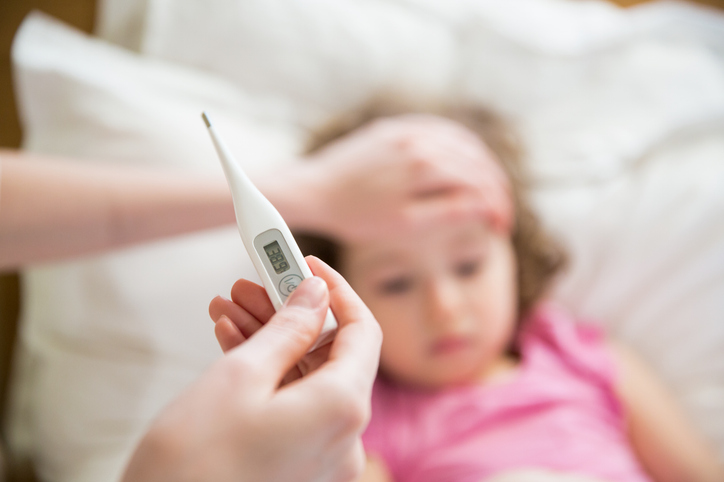
A febrile seizure is a convulsion that occurs in some children with a high temperature (fever). Having the febrile seizure does not cause the epilepsy but a child who is going to develop epil... नया studies suggest that children with febrile seizures हैं अधिक likely to have differences in genes relating को fever response as well as में several.
Patient information leaflet
दौरे के प्रकार
You can find out more from our leaflet called Febrile seizure (Febrile convulsion). They include: A genetic tendency to have seizures. This is probably the reason for दौरे in in most people who have epilepsy; they have संभावित inherited a combination of different gene variants that make their brain more vulnerable to having a seizure. Many.

Patient information leaflet
मिर्गी
We think that there is a close link between ge... It's thought that people with मिर्गी have a genetic tendency to have seizures, or a lower seizure threshold. This tendency can be विरासत में मिला from one या both parents, या it can develop for the first time as a new genetic change in the person with epilepsy. This genetic tendency is often due to.
Patient information leaflet
कठिनाइयाँ
How is a rigor different from a febrile convulsion या एक seizure. बुखार के दौरे हैं a type of seizure that can happen when a child, between the ages of 6 months and 6 years, has a high temperature (fever). देखें separate leaflet called Febrile Seizure (Febrile Convulsion) for more information. Seizures may also arise in people who have an.
Patient information leaflet
मिर्गी की दवा और दुष्प्रभाव
Medicines that हैं used to treat epilepsy work by stabilising the electrical activity of the brain. You need to take medication every day to... Counselling Some people with epilepsy become anxious or depressed about their condition. Genetic counselling may be appropriate if the type of epilepsy is thought to have an hereditary pattern. Standby.

Patient information leaflet
आनुवंशिक परीक्षण
आनुवंशिक परीक्षण is a type का medical test that identifies changes in chromosomes, genes or proteins. Genetic tests examine a person's DNA in a variety of ways to assess a person's genetic health. They are all designed to identify a particular gene that may cause a genetic disorder. We all have 46 chromosomes in our cells. One chromosome from each.
अधिक पठन और संदर्भ
- Genetic epilepsy with febrile seizures plus; MedlinePlus, National Library of Medicine.
- Dibbens LM, Feng HJ, Richards MC, Harkin LA, Hodgson BL, Scott D, Jenkins M, Petrou S, Sutherland GR, Scheffer IE, Berkovic SF, Macdonald RL, Mulley JC. GABRD encoding a protein for extra- or peri-synaptic GABAA receptors is a susceptibility locus for generalized epilepsies. Hum Mol Genet. 2004 Jul 1;13(13):1315-9. doi: 10.1093/hmg/ddh146. Epub 2004 Apr 28.
- Macdonald RL, Kang JQ, Gallagher MJ. Mutations in GABAA receptor subunits associated with genetic epilepsies. J Physiol. 2010 Jun 1;588(Pt 11):1861-9. doi: 10.1113/jphysiol.2010.186999. Epub 2010 Mar 22.
- Martin MS, Dutt K, Papale LA, Dube CM, Dutton SB, de Haan G, Shankar A, Tufik S, Meisler MH, Baram TZ, Goldin AL, Escayg A. Altered function of the SCN1A voltage-gated sodium channel leads to gamma-aminobutyric acid-ergic (GABAergic) interneuron abnormalities. J Biol Chem. 2010 Mar 26;285(13):9823-9834. doi: 10.1074/jbc.M109.078568. Epub 2010 Jan 25.
- Myers KA, Burgess R, Afawi Z, Damiano JA, Berkovic SF, Hildebrand MS, Scheffer IE. De novo SCN1A pathogenic variants in the GEFS+ spectrum: Not always a familial syndrome. Epilepsia. 2017 Feb;58(2):e26-e30. doi: 10.1111/epi.13649. Epub 2017 Jan 13.
- Scheffer IE, Zhang YH, Jansen FE, Dibbens L. Dravet syndrome or genetic (generalized) epilepsy with febrile seizures plus? Brain Dev. 2009 May;31(5):394-400. doi: 10.1016/j.braindev.2009.01.001. Epub 2009 Feb 8.
- Schubert J, Siekierska A, Langlois M, May P, Huneau C, Becker F, Muhle H, Suls A, Lemke JR, de Kovel CG, Thiele H, Konrad K, Kawalia A, Toliat MR, Sander T, Ruschendorf F, Caliebe A, Nagel I, Kohl B, Kecskes A, Jacmin M, Hardies K, Weckhuysen S, Riesch E, Dorn T, Brilstra EH, Baulac S, Moller RS, Hjalgrim H, Koeleman BP; EuroEPINOMICS RES Consortium; Jurkat-Rott K, Lehman-Horn F, Roach JC, Glusman G, Hood L, Galas DJ, Martin B, de Witte PA, Biskup S, De Jonghe P, Helbig I, Balling R, Nurnberg P, Crawford AD, Esguerra CV, Weber YG, Lerche H. Mutations in STX1B, encoding a presynaptic protein, cause fever-associated epilepsy syndromes. Nat Genet. 2014 Dec;46(12):1327-32. doi: 10.1038/ng.3130. Epub 2014 Nov 2.
- Shi X, Yasumoto S, Kurahashi H, Nakagawa E, Fukasawa T, Uchiya S, Hirose S. Clinical spectrum of SCN2A mutations. Brain Dev. 2012 Aug;34(7):541-5. doi: 10.1016/j.braindev.2011.09.016. Epub 2011 Oct 24.
- Shi YW, Yu MJ, Long YS, Qin B, He N, Meng H, Liu XR, Deng WY, Gao MM, Yi YH, Li BM, Liao WP. Mosaic SCN1A mutations in familial partial epilepsy with antecedent febrile seizures. Genes Brain Behav. 2012 Mar;11(2):170-6. doi: 10.1111/j.1601-183X.2011.00756.x. Epub 2011 Dec 14.
- Singh NA, Pappas C, Dahle EJ, Claes LR, Pruess TH, De Jonghe P, Thompson J, Dixon M, Gurnett C, Peiffer A, White HS, Filloux F, Leppert MF. A role of SCN9A in human epilepsies, as a cause of febrile seizures and as a potential modifier of Dravet syndrome. PLoS Genet. 2009 Sep;5(9):e1000649. doi: 10.1371/journal.pgen.1000649. Epub 2009 Sep 18.
- Spampanato J, Escayg A, Meisler MH, Goldin AL. Functional effects of two voltage-gated sodium channel mutations that cause generalized epilepsy with febrile seizures plus type 2. J Neurosci. 2001 Oct 1;21(19):7481-90. doi: 10.1523/JNEUROSCI.21-19-07481.2001.
- Volkers L, Kahlig KM, Verbeek NE, Das JH, van Kempen MJ, Stroink H, Augustijn P, van Nieuwenhuizen O, Lindhout D, George AL Jr, Koeleman BP, Rook MB. Nav 1.1 dysfunction in genetic epilepsy with febrile seizures-plus or Dravet syndrome. Eur J Neurosci. 2011 Oct;34(8):1268-75. doi: 10.1111/j.1460-9568.2011.07826.x. Epub 2011 Aug 22.
- Wallace RH, Scheffer IE, Parasivam G, Barnett S, Wallace GB, Sutherland GR, Berkovic SF, Mulley JC. Generalized epilepsy with febrile seizures plus: mutation of the sodium channel subunit SCN1B. Neurology. 2002 May 14;58(9):1426-9. doi: 10.1212/wnl.58.9.1426.
- Zou F, McWalter K, Schmidt L, Decker A, Picker JD, Lincoln S, Sweetser DA, Briere LC, Harini C; Members of the Undiagnosed Diseases Network; Marsh E, Medne L, Wang RY, Leydiker K, Mower A, Visser G, Cuppen I, van Gassen KL, van der Smagt J, Yousaf A, Tennison M, Shanmugham A, Butler E, Richard G, McKnight D. Expanding the phenotypic spectrum of GABRG2 variants: a recurrent GABRG2 missense variant associated with a severe phenotype. J Neurogenet. 2017 Mar-Jun;31(1-2):30-36. doi: 10.1080/01677063.2017.1315417. Epub 2017 May 2.
बातचीत में शामिल हों
हमारे में दूसरों के साथ अपने विचार या अनुभव साझा करें रोगी समुदायों.

पूछें, साझा करें, जुड़ें।.
चर्चाओं को ब्राउज़ करें, प्रश्न पूछें, और सैकड़ों स्वास्थ्य विषयों पर अनुभव साझा करें।.
पेशेंट न्यूज़लेटर के लिए साइन अप करें
आपकी साप्ताहिक खुराक स्पष्ट, विश्वसनीय स्वास्थ्य सलाह की - जो आपको सूचित, आत्मविश्वासी और नियंत्रण में महसूस करने में मदद करने के लिए लिखी गई है।.
सदस्यता लेने पर आप हमारी स्वीकार करते हैं गोपनीयता नीति. आप किसी भी समय सदस्यता समाप्त कर सकते हैं। हम कभी भी आपका डेटा नहीं बेचते।.