MUTYH-associated polyposis
अंतिम अद्यतन 10 Sept 2025
मरीज की संपादकीय दिशानिर्देशों
- डाउनलोडडाउनलोड
- साझा करें
- Language
- चर्चा
- Ask Patient
- ऑडियो संस्करण
- Google पर पसंदीदा स्रोतों में जोड़ें
MUTYH-associated polyposis (MAP) is an inherited disorder that is characterised by a greatly increased risk of cancer of the large intestine (colon) and rectum (collectively known as colorectal cancer). Most people with MAP develop multiple noncancerous (benign) growths (polyps) in the colon by around age 50 years. Polyps can also occur in the small intestine or the stomach. Individuals with this condition can develop ten to hundreds of polyps. Without monitoring and prompt follow-up, affected individuals have an 80 to 90 percent risk of developing colorectal cancer in their lifetimes. However, people with MAP who do not have polyps can also develop cancer.
के लिए वीडियो चयन आनुवंशिक स्थितियाँवीडियो लाइब्रेरी
विवरण
MUTYH-associated polyposis (MAP) is an inherited disorder that is characterised by a greatly increased risk of cancer of the large intestine (colon) and rectum (collectively known as colorectal cancer). Most people with MAP develop multiple noncancerous (benign) growths (polyps) in the colon by around age 50 years. Polyps can also occur in the small intestine or the stomach. Individuals with this condition can develop ten to hundreds of polyps. Without monitoring and prompt follow-up, affected individuals have an 80 to 90 percent risk of developing colorectal cancer in their lifetimes. However, people with MAP who do not have polyps can also develop cancer.
While colorectal cancer is the most common type of cancer in people with MAP, cancer can develop in other places in the body, including a section of the small intestine known as the duodenum, the breasts, the ovaries, the lining of the uterus (the endometrium), and the bladder. While cancers in other tissues have occurred in people with MAP, it is unclear if the risk for those cancers is higher than the risk for the general population.
Inheritance patterns
The source lists the following possible inheritance patterns: Autosomal recessive. More than one pattern can apply in different cases.
Related genes
Other names
Familial adenomatous polyposis 2
MUTYH-related attenuated familial adenomatous polyposis
MYH-associated polyposis
Related patient information and medicines

Patient information leaflet
आंतों के पॉलिप्स
Bowel polyps (colonic polyps) हैं small non-cancerous (benign) growths on the inside lining of the bowel (colon and rectum). What are bowel polyps. A bowel polyp is a small non-cancerous growth. There are different types of aden... See also the separate leaflet on Bowel Cancer Screening Bowel cancer screening. Polyposis syndromes Polyposis.

Patient information leaflet
आंत्र कैंसर की जांच
Bowel (colorectal) cancer है common. The outlook (prognosis) and chance of cure are much better if this cancer is detected at an early stage rather than at a later stage. Hereditary non-polyposis bowel cancer (HNPCC). If you have a disease or family history that causes an increased risk of developing bowel cancer, your doctor will advise on the.
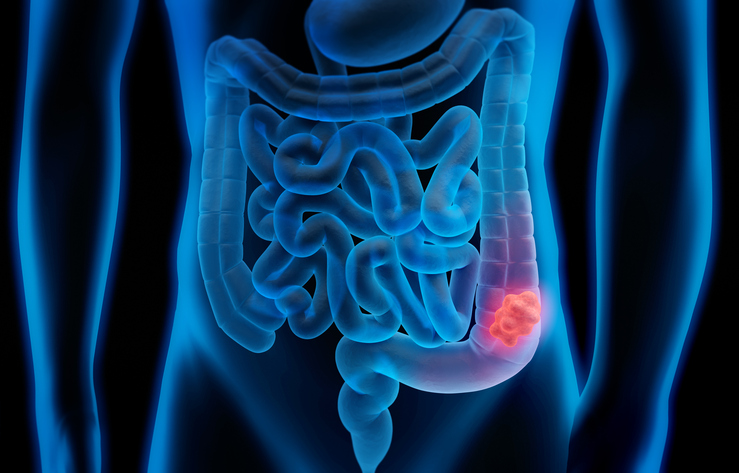
Patient information leaflet
आंत्र कैंसर
...owel-cancer-colorectal](/health/colon-rectal-bowel-cancer-colorectal) Follow Patient: Website: [/](https://patient.info/) Facebook: [https://www.facebook.com/patient](https://www.facebook.com/patient) Twitter: [https://twitter.com/patient](https://twitter.com/patient) Pinterest:.

Patient information leaflet
लिंग कैंसर
लिंग कैंसर है a cancer that develops on the penis. A cancerous (malignant) tumour starts from one abnormal cell. The exact reason why a cell becomes cancerous is unclear. These include a condition called erythroplasia of Queyrat and. Phimosis Phimosis और paraphimosis in adults and poor hygiene around the foreskin can increase the risk of.

Patient information leaflet
विकास में रुकावट
Dwarfism is a medical or genetic condition which causes people to have restricted growth so that they are shorter than average. Specifically, people with dwarfism grow no higher than 4 ft 10 ins (147 cm). It can be... Dwarfism is due to a genetic or medical condition, and there are hundreds of causes. In a genetic cause there is a change.

Patient information leaflet
बीआरसीए जीन
There are a few known gene changes (mutations) that can increase the risk of certain cancers, and tests available for some of them, including BRCA1 and BRCA2 gene mutations. The BRCA1 and BRCA2 genes normally protect against certain cancers, particularly breast cancer and ovarian cancer. If there is a mutation in one of these genes then this may.
अधिक पठन और संदर्भ
- MUTYH-associated polyposis ; MedlinePlus, National Library of Medicine.
- Kim JC, Bodmer WF. Genotypic and Phenotypic Characteristics of Hereditary Colorectal Cancer. Ann Coloproctol. 2021 Dec;37(6):368-381. doi: 10.3393/ac.2021.00878.0125. Epub 2021 Dec 22.
- Magrin L, Fanale D, Brando C, Corsini LR, Randazzo U, Di Piazza M, Gurrera V, Pedone E, Bazan Russo TD, Vieni S, Pantuso G, Russo A, Bazan V. MUTYH-associated tumor syndrome: The other face of MAP. Oncogene. 2022 Apr;41(18):2531-2539. doi: 10.1038/s41388-022-02304-y. Epub 2022 Apr 14.
- Mao R, Krautscheid P, Graham RP, Ganguly A, Shankar S, Ferber M, Hegde M; ACMG Laboratory Quality Assurance Committee. Genetic testing for inherited colorectal cancer and polyposis, 2021 revision: a technical standard of the American College of Medical Genetics and Genomics (ACMG). Genet Med. 2021 Oct;23(10):1807-1817. doi: 10.1038/s41436-021-01207-9. Epub 2021 Jun 17.
- Nielsen M, Infante E, Brand R. MUTYH Polyposis. 2012 Oct 4 [updated 2021 May 27]. In: Adam MP, Bick S, Mirzaa GM, Wallace SE, Amemiya A, editors. GeneReviews(R) [Internet]. Seattle (WA): University of Washington, Seattle; 1993-2026. Available from http://www.ncbi.nlm.nih.gov/books/NBK107219/
- Syngal S, Brand RE, Church JM, Giardiello FM, Hampel HL, Burt RW; American College of Gastroenterology. ACG clinical guideline: Genetic testing and management of hereditary gastrointestinal cancer syndromes. Am J Gastroenterol. 2015 Feb;110(2):223-62; quiz 263. doi: 10.1038/ajg.2014.435. Epub 2015 Feb 3.
- Zaffaroni G, Mannucci A, Koskenvuo L, de Lacy B, Maffioli A, Bisseling T, Half E, Cavestro GM, Valle L, Ryan N, Aretz S, Brown K, Buttitta F, Carneiro F, Claber O, Blanco-Colino R, Collard M, Crosbie E, Cunha M, Doulias T, Fleming C, Heinrich H, Huneburg R, Metras J, Nagtegaal I, Negoi I, Nielsen M, Pellino G, Ricciardiello L, Sagir A, Sanchez-Guillen L, Seppala TT, Siersema P, Striebeck B, Sampson JR, Latchford A, Parc Y, Burn J, Moslein G. Updated European guidelines for clinical management of familial adenomatous polyposis (FAP), MUTYH-associated polyposis (MAP), gastric adenocarcinoma, proximal polyposis of the stomach (GAPPS) and other rare adenomatous polyposis syndromes: a joint EHTG-ESCP revision. Br J Surg. 2024 May 3;111(5):znae070. doi: 10.1093/bjs/znae070.
हमारे में दूसरों के साथ अपने विचार या अनुभव साझा करें रोगी समुदायों.
ऑनलाइन विश्वसनीय उपचार और स्वास्थ्य सेवाओं तक सरल पहुंच।.
Common conditions
Get help with common conditions through the NHS, without a GP appointment.





पेशेंट न्यूज़लेटर के लिए साइन अप करें
आपकी साप्ताहिक खुराक स्पष्ट, विश्वसनीय स्वास्थ्य सलाह की - जो आपको सूचित, आत्मविश्वासी और नियंत्रण में महसूस करने में मदद करने के लिए लिखी गई है।.
सदस्यता लेने पर आप हमारी स्वीकार करते हैं गोपनीयता नीति. आप किसी भी समय सदस्यता समाप्त कर सकते हैं। हम कभी भी आपका डेटा नहीं बेचते।.