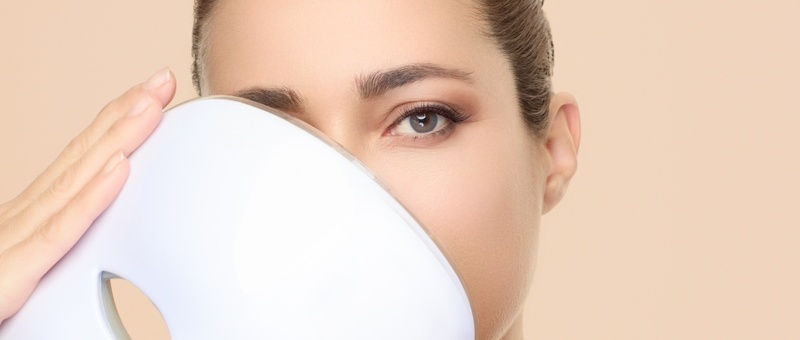
क्या एलईडी फेस मास्क वास्तव में काम करते हैं?
द्वारा सहकर्मी समीक्षा की गई Dr Colin Tidy, MRCGPद्वारा लिखित
मरीज की संपादकीय दिशानिर्देशों
- डाउनलोडडाउनलोड
- साझा करें
- Language
- चर्चा
- ऑडियो संस्करण
- Google पर पसंदीदा स्रोतों में जोड़ें
द्वारा सहकर्मी समीक्षा की गई Dr Colin Tidy, MRCGPद्वारा लिखित
मरीज की संपादकीय दिशानिर्देशों
LED face masks are everywhere right now, promising to blast away acne and smooth out fine lines with nothing but wavelengths of light.
But do these products promise more than they actually deliver? We asked a dermatologist for their take.
From silicone shields to full-face plastic visors, the at-home LED mask market is booming, as consumers turn to blue, red, and infrared light to combat मुँहासे, smooth complexions, and target the signs of ageing.
However, these highly hyped, celebrity-endorsed products are facing increased regulatory scrutiny. Notably, premium brand Beauty Pie’s LED face mask was recently banned by the Advertising Standards Authority (ASA). The ruling followed the company’s failure to provide robust evidence to support its claim that the device could reduce wrinkles within four weeks.
Dr Anjali Mahto, Consultant Dermatologist and Founder of Self London, UK, explains that the ruling reflects a wider issue - the at-home LED market has grown rapidly without the fundamental parameters of the technology being properly defined or validated.
“What it tells us is that marketing claims have outpaced the evidence,” she says. “Regulators are now having to step in to protect consumers from claims that sound scientific, but aren't actually substantiated at all.”

The phrase ‘clinically proven’ is everywhere in beauty marketing. In theory, it suggests a product has been tested and supported by credible evidence or health experts. However, that isn’t always the case. To avoid falling for clever branding, you should look beyond the label before trusting claims like these.
Mahto says that for a product to be truly ‘clinically proven’, it should be backed by solid, independent evidence from well-designed trials - with enough participants, proper controls, and clear, measurable results.
“This doesn’t mean a small study of 28 people with no placebo group,” she explains. “If you see the phrase, ‘clinically proven’, ask yourself - who conducted the trial, how many people were involved, and was it independently verified or funded by the brand selling the device?
Often, people testing devices such as LED face masks also use other skincare products at the same time. This can make it difficult to tell whether any improvements in the skin are actually due to the mask itself.
As Mahto explains, this is because you can’t isolate the effect - so it’s hard to know which element of the routine is having the most impact, or whether one is working better than another.
“In the case of the ASA ruling, testers were also using an exfoliant and a hydrogel that don't even come with the mask,” she says. “So any improvement in fine lines could just as easily be attributed to the products. Without that level of control, you genuinely don't know what's responsible for any change you see."
Many LED masks are marketed as a way to reduce or even reverse signs of ageing. With so many people endorsing them and buying into the trend, they can start to feel like a miracle solution. But it almost seems too good to be true. And from an evidence perspective, Mahto confirms your suspicions - yes, it is.
The dermatologist explains that there is some evidence to suggest that LED can lead to subtle improvements in skin brightness and mild inflammation. However, the research falls short when it comes to meaningful structural changes, such as boosting collagen, improving pigmentation, or tightening your skin.
“When you assess patients objectively - for example, through imaging or standardised photography - the improvements are often far more modest than the marketing suggests,” she says.
When comparing at-home LED devices with those used in clinics, there’s a clear difference between the two. Unsurprisingly, in-clinic treatments - overseen by qualified health professionals - tend to deliver better results.
“It comes down to intensity, precision, and control,” Mahto explains. “In-clinic devices deliver higher energy with much tighter specifications around wavelength and dose, which allows them to produce predictable, reproducible results.
“At-home masks deliver lower energy at much broader wavelengths with far less control - meaning the stimulus is often simply insufficient to reach the biological threshold needed for meaningful change.”
If you’ve just started using - or are thinking of buying - an at-home LED mask to improve the appearance of your skin, Mahto has some guidance on what you can realistically expect.
She explains that with consistent use over weeks or months, you might notice a very subtle brightening, or a temporary reduction in redness or puffiness. However, if you’re expecting a visible reduction in wrinkles, significant improvement in scarring, or lasting structural changes to your skin, that’s very unlikely based on the current evidence.
“The effects, when they occur, also tend to be modest and temporary,” adds the dermatologist.
Mahto also has some advice before you open your wallet and spend what can be a fair amount of money on these devices.
“Ask yourself honestly - am I buying this because I genuinely believe the evidence that supports the claims?” she says. “Or is it because I enjoy the ritual?
“If it’s the latter, there’s no harm in it, but don’t expect transformative results. If it's the former, I'd encourage you to look critically at where the evidence actually stands, because the gap between marketing and reality is often quite wide.”
Mahto concludes by emphasising the importance of independent evidence over studies funded by manufacturers.
She also advises being sceptical of before-and-after photos, as they’re often taken under different lighting, angles, and skin conditions. It’s worth asking whether any claimed improvement can realistically be attributed to the device alone, or whether other factors might be at play.
“And remember,” she cautions. “If something sounds too good to be true at that price point, it probably is.”

त्वचा, नाखून और बालों का स्वास्थ्य
आपने शायद AI-संचालित स्वास्थ्य उपकरण देखे होंगे जो दावा करते हैं कि वे ऑनलाइन फोटो अपलोड करने के बाद आपकी त्वचा का विश्लेषण कर सकते हैं। एक उदाहरण वायरल ChatGPT 'स्किनकेयर एनालिसिस' ट्रेंड है, जहां उपयोगकर्ता AI से केवल एक सेल्फी के माध्यम से मुँहासे, पिग्मेंटेशन, या उम्र बढ़ने जैसी चिंताओं का आकलन करने के लिए कहते हैं। जबकि ये उपकरण त्वरित, सुलभ प्रतिक्रिया देने के लिए लोकप्रियता में बढ़ रहे हैं, विशेषज्ञ चेतावनी देते हैं कि वे अक्सर आपके स्वास्थ्य के लिए अधिक हानि कर सकते हैं।.
विक्टोरिया रॉ द्वारा
त्वचा, नाखून और बालों का स्वास्थ्य
Neurocosmetics are skincare products that have gained traction in the wellness world for their supposed ability to promote mental wellbeing. By interacting with your skin’s nervous system, these products claim to positively affect your mood and emotional state. For beauty enthusiasts, this might sound like the ultimate fusion of skincare and self-care - but is it too good to be true? Let’s see what an expert has to say and whether there’s real science behind the hype.
विक्टोरिया रॉ द्वारा

बीए (ऑनर्स), अंग्रेजी साहित्य
विक्टोरिया एक कंटेंट राइटर हैं जो मानसिक कल्याण, सामाजिक प्रवृत्तियों और हमारी सेहत पर प्रौद्योगिकी के प्रभाव पर विशेष रुचि रखती हैं।.

MBBS, MRCGP, MRCP (Paediatrics), DCH
डॉ. कॉलिन टिडी एक एनएचएस डॉक्टर हैं, जो ऑक्सफोर्डशायर में स्थित हैं।.
इस पृष्ठ की जानकारी योग्य चिकित्सकों द्वारा सहकर्मी समीक्षा की गई है।.
लेख इन भाषाओं में भी उपलब्ध है अंग्रेज़ी, जर्मन, स्पेनिश, फ्रेंच, इतालवी, पुर्तगाली, हिंदी, हिब्रू, अरबी, और स्वीडिश.
द्वारा लिखित:
Victoria Rawद्वारा सहकर्मी समीक्षा की गई
Dr Colin Tidy, MRCGP
चर्चाओं को ब्राउज़ करें, प्रश्न पूछें, और सैकड़ों स्वास्थ्य विषयों पर अनुभव साझा करें।.

अपने लक्षणों का ऑनलाइन मुफ्त में मूल्यांकन करें
आपकी साप्ताहिक खुराक स्पष्ट, विश्वसनीय स्वास्थ्य सलाह की - जो आपको सूचित, आत्मविश्वासी और नियंत्रण में महसूस करने में मदद करने के लिए लिखी गई है।.
सदस्यता लेने पर आप हमारी स्वीकार करते हैं गोपनीयता नीति. आप किसी भी समय सदस्यता समाप्त कर सकते हैं। हम कभी भी आपका डेटा नहीं बेचते।.