रोज़ोला
द्वारा सहकर्मी समीक्षा की गई डॉ राचेल हडसन, एमआरसीजीपीद्वारा अंतिम अपडेट Dr Rosalyn Adleman, MRCGPअंतिम अद्यतन 23 मार्च 2023
मरीज की संपादकीय दिशानिर्देशों
- डाउनलोडडाउनलोड
- साझा करें
- Language
- चर्चा
- Ask Patient
- ऑडियो संस्करण
- Google पर पसंदीदा स्रोतों में जोड़ें
रोज़ोला एक वायरल संक्रमण है। यह आम है और मुख्य रूप से 6 महीने से 3 साल की उम्र के छोटे बच्चों को प्रभावित करता है। यह आमतौर पर एक हल्का संक्रमण होता है जो दीर्घकालिक समस्याएं नहीं पैदा करता। पूर्ण रूप से ठीक होना सामान्य है।.
एक नजर में
Roseola is a common childhood illness, usually affecting children aged 6 months to 3 years.
It typically starts with a sudden high fever lasting 3-4 days, followed by a pink spotty rash.
The rash often begins on the body and spreads to the arms and legs, but not usually the face.
Roseola is contagious and spreads through saliva.
Treatment focuses on keeping the child comfortable, for example by giving paracetamol or ibuprofen for fever.
Ensure your child drinks plenty of fluids to avoid dehydration.
Seek medical help if you are worried about your child's dehydration.
What is roseola?
Roseola is also known as roseola infantum, exanthem subitum, sixth disease and three-day rash. The disease is most common in those aged 6 months to 3 years. It is rare in adults, probably because childhood infection gives lifelong immunity to most people. It is usually caused by a virus called human herpesvirus type 6 (HHV-6). It may also be caused by human herpesvirus type 7 (HHV-7).
Symptoms of roseola
Children infected with the roseola virus will typically develop the following symptoms:
उच्च तापमान (बुखार) suddenly develops. The child can be flushed, irritable, and unwell with the fever. The temperature can be as high as 40°C. The fever typically lasts 3-4 days and then drops quickly back to normal.
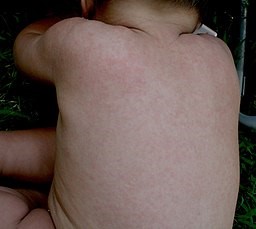
A rash usually appears when the fever subsides, when the child is getting better. Small pink spots appear. They usually start on the body and then spread to the arms and legs. The rash does not usually develop on the face. The rash is not itchy or painful and does not blister. The rash usually lasts for about 1-2 days, but sometimes fades within hours.
Some children get similar spots in their mouth (on the soft palate and the uvula).
A sore throat, खांसी and runny nose may develop and the child may go off their food.
Some glands in the neck may swell.
Roseola is often diagnosed when the child is getting better. At first the high fever may cause concern to parents and doctors if it is not clear what is causing it. Other more serious illnesses may need to be ruled out. The sudden drop in fever and the appearance of the typical rash are reassuring. This indicates that the fever has been caused by the roseola virus and nothing more serious.
रोज़ोला
Is roseola contagious?
Roseola is contagious. The spread of the virus is from person to person via saliva. The time from infection to symptoms appearing (incubation period) is 9 to 15 days. The chid is probably infectious during the whole period of the disease and maybe even before the high temperature (fever) appears.
Treatment for roseola
There is no treatment that kills the virus. Treatment aims to keep the child as comfortable as possible until the illness goes.
Dealing with a high temperature (fever)
A fever can make a child feel uncomfortable and irritable. There are things that you can do that may bring the temperature down and make your child feel more comfortable.
You can give paracetamol or ibuprofen to lower a temperature and help ease headaches, and aches and pains. You can buy पैरासिटामोल और ibuprofen in liquid form, or as melt-in-the-mouth tablets, for children. Both these medicines come in various brand names. The dose for each age is shown on the medicine packet.
Do not use more than advised on the packet or bottle. Do not use ibuprofen in children in whom attacks of अस्थमा have been triggered by ibuprofen in the past.
Keep your child cool. Take extra layers of clothes off your child if the room is normal room temperature. Use light cotton clothes or bedding. Open windows or use a fan in the room where appropriate. Do not cold-sponge a child who has a fever. This used to be popular but it is now not advised.
This is because the blood vessels under the skin become narrower (constrict) if the water is too cold. This reduces heat loss, and can trap heat in deeper parts of the body. The child may then get worse. Many children also find cold-sponging uncomfortable.
Give lots to drink. This helps to prevent a lack of fluid in the body (dehydration). You might find that a child is more willing to have a good drink if they are not so irritable. So, if they are not keen to drink, it may help to give some paracetamol first. Then, try to give the child a drink 30 minutes or so later when their temperature is likely to have come down.
Encourage your child to have plenty to drink if they have a fever. Signs of dehydration include:
ए सूखा मुँह.
No tears
Sunken eyes.
नींद आना।.
कुल मिलाकर तबीयत और बिगड़ रही है।.
Passing less urine or having fewer wet nappies.
Seek medical help if you suspect that your child is becoming dehydrated.
Complications from roseola
Sometimes the high temperature (fever) can cause a fit (also known as a febrile convulsion or febrile seizure). This can be alarming but is usually not serious. Other reported complications are very rare. Full recovery is normally expected. People who have a weakened immune system (immunocompromised) may suffer from more serious complications such as एन्सेफलाइटिस, मायोकार्डिटिस और हेपेटाइटिस.
Once a person has had this condition then they will be immune from having it again.
रोगी के लिए चयन बचपन के संक्रमण

बच्चों का स्वास्थ्य
संक्रमण के लिए स्कूल से बहिष्कार
This leaflet provides brief information about common childhood infections and whether or not children should go to school, nursery or other childcare.
डॉ. कॉलिन टिडी, MRCGP द्वारा

बच्चों का स्वास्थ्य
हाथ, पैर और मुंह की बीमारी
हाथ, पैर और मुंह की बीमारी आमतौर पर एक छोटी और हल्की बीमारी होती है जो मुख्य रूप से बच्चों को प्रभावित करती है। अधिकांश बच्चे दस दिनों के भीतर पूरी तरह से ठीक हो जाते हैं, और आमतौर पर इससे भी कम समय में। गंभीर जटिलताएं शायद ही कभी होती हैं। यह बीमारी जानवरों को प्रभावित करने वाली समान नाम वाली बीमारी से संबंधित नहीं है।.
डॉ. टोनी हैज़ल, FRCGP द्वारा
अक्सर पूछे जाने वाले प्रश्न
During which period is a child most likely to spread the roseola virus to others?
The child is probably infectious throughout the entire duration of the illness and potentially even before the high temperature (fever) first appears.
Are there any specific places on the body where the roseola rash typically does not appear?
The rash from roseola does not usually develop on the face.
If my child has a high fever, is it safe to use cold sponges or baths to cool them down?
No, cold-sponging a child with a fever is not advised. This can cause blood vessels under the skin to constrict, reducing heat loss and trapping heat in the body. It can also make the child uncomfortable.
What are some of the less common symptoms a child might experience with roseola, besides the obvious fever and rash?
Besides the fever and rash, some children might experience a sore throat, cough, runny nose, go off their food, and have swollen glands in the neck. Some may also develop small spots in their mouth, specifically on the soft palate and uvula.
What is the typical time frame from when a child is infected with roseola until symptoms start to show?
The incubation period, or the time from infection to the appearance of symptoms, is usually between 9 to 15 days.
अधिक पठन और संदर्भ
- Wolz MM, Sciallis GF, Pittelkow MR; मानव हर्पीसवायरस 6, 7, और 8 एक त्वचाविज्ञान दृष्टिकोण से। मेयो क्लिन प्रोसीडिंग्स। 2012 अक्टूबर;87(10):1004-14. doi: 10.1016/j.mayocp.2012.04.010. Epub 2012 जुलाई 21.
- रोज़ोला; डर्मनेट NZ
- Stone RC, Micali GA, Schwartz RA; रोज़ोला इन्फेंटम और इसके कारण बनने वाले मानव हर्पीसवायरस। इंट जे डर्माटोल। 2014 अप्रैल;53(4):397-403।.
- Allmon A, Deane K, Martin KL; बच्चों में होने वाले आम त्वचा के चकत्ते। Am Fam Physician. 2015 Aug 1;92(3):211-6.
- Mullins TB, Krishnamurthy K; Roseola Infantum (Exanthema Subitum, Sixth Disease)
लेखक के बारे मेंपूरा जीवन परिचय देखें
अपडेट किया

Dr Rosalyn Adleman, MRCGP
MRCGP
डॉ. रोज़लिन एडलमैन, उत्तर लंदन में एनएचएस जीपी के रूप में काम कर रही हैं।.
समीक्षक के बारे मेंपूरा जीवन परिचय देखें

डॉ राचेल हडसन, एमआरसीजीपी
सामान्य चिकित्सक और चिकित्सा लेखक
MBChB, MRCGP (2008), BSc (Medical Science), DFSRH, DRCOG, DCH
डॉ राचेल हडसन, इंग्लैंड के उत्तर पश्चिम में एनएचएस जीपी के रूप में काम कर रही हैं।.
हमारे में दूसरों के साथ अपने विचार या अनुभव साझा करें रोगी समुदायों.
ऑनलाइन विश्वसनीय उपचार और स्वास्थ्य सेवाओं तक सरल पहुंच।.
Common conditions
Get help with common conditions through the NHS, without a GP appointment.





पेशेंट न्यूज़लेटर के लिए साइन अप करें
आपकी साप्ताहिक खुराक स्पष्ट, विश्वसनीय स्वास्थ्य सलाह की - जो आपको सूचित, आत्मविश्वासी और नियंत्रण में महसूस करने में मदद करने के लिए लिखी गई है।.
सदस्यता लेने पर आप हमारी स्वीकार करते हैं गोपनीयता नीति. आप किसी भी समय सदस्यता समाप्त कर सकते हैं। हम कभी भी आपका डेटा नहीं बेचते।.