Wisdom teeth
Peer reviewed by Dr Colin Tidy, MRCGPLast updated by Dr Hayley Willacy, FRCGP Last updated 20 Nov 2023
Meets Patient’s editorial guidelines
- DownloadDownload
- Share
- Language
- Discussion
- Audio Version
- Add to preferred sources on Google
In total, adults can expect to get four wisdom teeth: one on each side of the top and the bottom jaw. Occasionally known as 'third molars', wisdom teeth are the last to come through and their arrival, which can sometimes be late into your twenties, is not always welcome.
In some cases there is not enough room in the jawbone for these extra teeth to come through and, unfortunately, this can cause a range of painful problems. Often the discomfort and pain will go away on its own, but sometimes wisdom teeth will need to be removed.
The procedure is usually a quick procedure carried out using local anaesthetic, with a recovery time of a couple of days.
At a glance
A wisdom tooth is a third molar that appears in your mouth usually between ages 17 and 25.
Some people do not develop wisdom teeth, and sometimes they do not fully emerge, which is called 'impacted'.
Impacted wisdom teeth can cause pain, swelling, earache, infection, cysts or abscesses.
Wisdom teeth can be removed, usually under local anaesthetic, in a procedure that can take 1 to 20 minutes.
After removal, avoid aspirin, eat soft foods, and be careful with hot food or drinks.
Seek immediate dental help for extreme pain, swelling, extensive bleeding, or a high temperature.
Complications can include unexpected reactions, damage to other teeth or nerves, or infection.
wisdom teeth
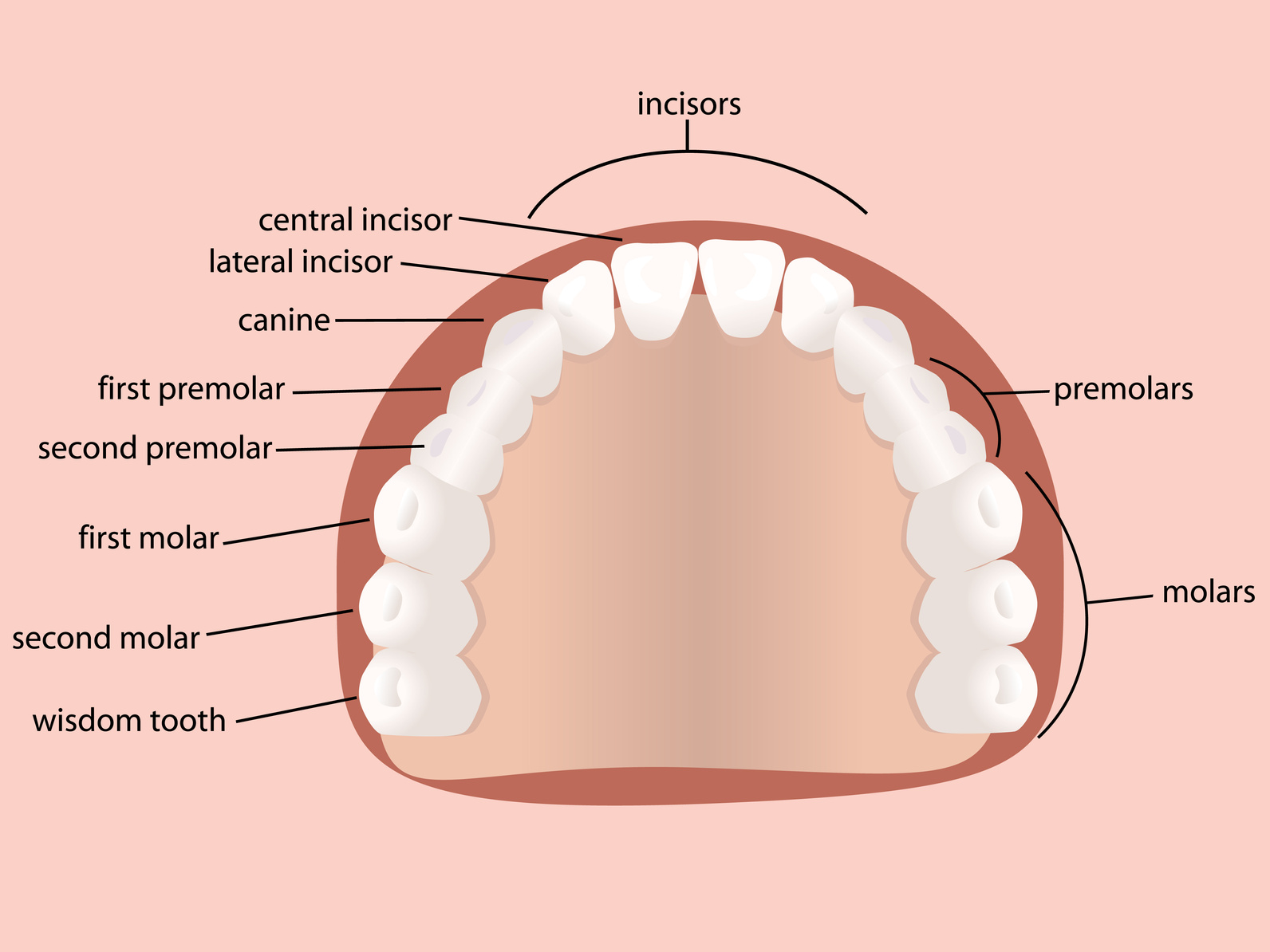
What is a wisdom tooth?
A 'wisdom' tooth is a third molar tooth. They can appear in upper and lower jaw, on both sides. It is possible to have four in total.
Does everyone have wisdom teeth?
No. It is thought that between 5 and 40 people out of a hundred are missing one or more third molars. They may not come through for many reasons including genetics (if your parents didn't have them, you probably won't too). Other factors are the size and shape of your jaw, the teeth you already have and how you chew. Sometimes the wisdom tooth becomes stuck - either it can't emerge at all, or it might come through at an angle. This is known as being 'impacted' and it happens in 17-69 people out of 100. You can detect wisdom teeth that haven't come through with an x-ray.
What age do wisdom teeth come in?
Wisdom teeth (or third molars) do not normally start to emerge until between the ages of 17 and 25, although some people don't actually ever get them. In most cases, wisdom teeth will ache when they emerge through the gums, but otherwise cause you very little discomfort.
When are wisdom teeth a problem?
However, if the space in the mouth is limited, the wisdom teeth may become impacted. This is when a tooth tries to come through the gum but gets stuck against the tooth next to it and emerges at an angle.
This can cause:
Toothache.
Swelling.
infection.
Cysts and abscesses.
If this is the case, then it could be necessary to have the wisdom teeth removed from your mouth.
How are wisdom teeth removed?
Before the procedure
Before the procedure, the dentist will talk through how to prepare. Smokers will need to stop their habit several weeks before the operation to avoid the chances of complications, and everyone having the treatment will need to sign a consent that shows they understand any risks associated with the treatment.
If there are any alternatives to extraction, the dentist will explain them. For example, if a wisdom tooth is impacted but otherwise healthy and not causing discomfort or tooth pain then it may not need to be removed at all.
During the procedure
When it comes to the procedure itself, a local anaesthetic will be used to block the pain from the nerves but you will remain awake throughout. People who are nervous about going in the chair, may be given a sedative treatment to help relax whilst the procedure takes place.
If your case is particularly challenging then you may need to go to a hospital to see an oral surgeon specialist to plan and complete the treatment. The fear most people have is pain during the treatment; however, the procedure itself is actually pain-free.
The pain after the procedure is typical of any surgical procedure and advice will be given on how to manage the healing socket after the procedure.
Having a wisdom tooth removed is generally straightforward and the extraction can take as little as a minute. The same method is used as would be for any other extraction, in that specialised instruments are used to widen the socket. The tooth is then rocked back and forth in order to loosen the fine ligament that holds it in place, and is then removed it.
If the tooth is highly impacted, it could be necessary for the dentist to make a small incision in your gum to gain access to the tooth. Once removed, the dentist will use stitches (usually dissolvable) to help your gums to heal. In this scenario, the procedure can take around 20 minutes to complete.
After the removal
If a general anaesthetic is used (which is rare these days) a friend or family member will be needed to take you home and look after you for the next 24 hours, as the lingering effects of the anaesthetic can affect your behaviour and judgement.
Although local anaesthetics have less impact immediately after the procedure, numbness in the mouth is usual for a few hours afterwards, so care should be taken not to inadvertently scald yourself with hot food or drink.
Anti-inflammatory medicine or antibiotics might be prescribed to take during recovery. If over-the-counter painkillers are needed, aspiring should be avoided. Blood clots help with the healing process and aspirin can complicate this by thinning the blood.
When brushing, avoid the affected area for a couple of days. It is sensible to eat softer foods while the gum heals and avoid chewing with the teeth near where the tooth was removed.
If there is extreme pain or swelling, extensive bleeding or you have a temperature then consult a dentist immediately.
Complications
In the days following the removal the face may feel swollen or sore but this should soon pass. In other cases there is the possibility of an unexpected reaction to anaesthetic or other complications such as accidental damage to teeth, nerves, sockets or infection.
Other complications depend on the specifics of your situation. The dentist will discuss them ahead of the procedure.
How much does it cost to remove a wisdom tooth?
Wisdom tooth extractions come under band 2 for NHS dental treatments, currently costing £70.70. If you have the treatment carried out privately the cost varies widely and will depend on the complexity and time it takes to complete.
Will removal affect my brushing?
It may be uncomfortable to brush shortly after having wisdom teeth removed, especially around any wounds. For this reason, the dentist might recommend using a mouthwash to help keep the area clean.
What is 'dry socket'?
Dry socket, the informal name for alveolar osteitis, is when the blood clot helping the wound heal around your tooth socket becomes infected, causing severe pain which is not controlled with medicine.
Dry socket requires immediate attention. This usually involves anti-inflammatories to ease the discomfort, a medicated antiseptic dressing to promote healing and possibly a course of antibiotics to control the infection.
Can I have wisdom teeth removed whilst pregnant?
There is no reason to believe that the procedure would have any impact on your pregnancy. However, dentists may opt not to use X-rays and to use local, rather than general, anaesthetic.
In many cases the dentist is likely to wait and carry out the treatment after the birth, unless it was considered an emergency procedure.
Will I need time off to recover?
Most people need two or three days off work to recover from the effects of the anaesthetic after they have had wisdom teeth removed. Those with a more physical job may need an extra day or two.
If work involves driving, it should be fine to return after 24-48 hours after having had anaesthetic, but use judgement and seek advice from a dentist if there is doubt.
This article was initially provided by Toothpick, a provider of online dentist appointments in the UK.
Patient picks for Dental problems

Oral and dental care
Dental implants
A dental implant is a modern way of replacing missing teeth. It takes the form of a titanium post that fixes into your jawbone and is topped by an artificial tooth. The crown of your dental implant will be almost indistinguishable from the rest of your teeth, and will work like a normal tooth - making implants a very attractive, long-term solution. The process can take between two and six months, as the crown is fitted once the titanium post has integrated with the jawbone. Dental implants are generally carried out by private cosmetic dentists, and are rarely offered on the NHS. Anyone with healthy teeth and gums can have an implant fitted.
by Toothpick
Oral and dental care
Dental plaque and gum disease
A build-up of plaque and tartar can lead to inflamed and infected gums. Mild gum disease is called gingivitis and is not usually serious. More severe gum disease (periodontitis), can lead to teeth falling out. Good oral hygiene includes regular tooth brushing and cleaning between teeth - for example, by flossing. This can usually prevent gum disease and treat mild-to-moderate gum disease. Specialist dental treatments may be needed for severe gum disease.
by Dr Ben Williams, MB ChB
Frequently asked questions
Can I prevent my wisdom teeth from becoming a problem?
The article does not explicitly state how to prevent wisdom teeth from becoming a problem, but it does mention that if a wisdom tooth is impacted but otherwise healthy and not causing discomfort or tooth pain, it may not need to be removed. Regular dental check-ups can help monitor their development.
Are there any alternatives to having wisdom teeth removed if they are causing issues?
The dentist will discuss any alternatives to extraction if they exist. For example, if a wisdom tooth is impacted but not causing discomfort or tooth pain, it might not need to be removed at all. However, if problems like infection or persistent pain arise, removal is often necessary.
How long does the numbness last after a local anaesthetic?
After a local anaesthetic, numbness in the mouth is usual for a few hours. During this time, care should be taken to avoid inadvertently scalding yourself with hot food or drink.
What type of painkillers should I use after wisdom tooth removal?
If over-the-counter painkillers are needed after wisdom tooth removal, aspirin should be avoided. This is because blood clots help with the healing process, and aspirin can complicate this by thinning the blood.
How soon can I return to normal eating habits after the procedure?
It is sensible to eat softer foods while the gum heals and avoid chewing with the teeth near where the tooth was removed. The article does not specify an exact timeframe for returning to normal eating habits but implies it should be done gradually as the healing progresses.
When can I resume brushing my teeth normally after a wisdom tooth extraction?
You should avoid brushing the affected area for a couple of days after the removal. The dentist might recommend using a mouthwash to help keep the area clean during this time.
Further reading and references
- Muhsin H, Brizuela M; Oral Surgery, Extraction of Mandibular Third Molars.
About the authorView full bio

Dr Hayley Willacy, FRCGP
General Practitioner, Medical Author
MBChB (1992), DRCOG, DFFP, MRCOG (Part 1) MRCGP (2007), DFSRH (2013), MSc - medical education (2020)
Dr Hayley Willacy was an NHS GP working in northwest England, who retired from clinical practice in 2022 after 30 years.
About the reviewerView full bio

Dr Colin Tidy, MRCGP
General Practitioner, Medical Author
MBBS, MRCGP, MRCP (Paediatrics), DCH
Dr Colin Tidy is an NHS Doctor, based in Oxfordshire.
Article history
Article also available in English, German, Spanish, French, Italian, Portuguese, Hindi, Hebrew, Arabic, and Swedish.
Next review due: 18 Nov 2028
20 Nov 2023 | Latest version
Join the conversation
Share your thoughts or experiences with others in our patient communities.

Ask, share, connect.
Browse discussions, ask questions, and share experiences across hundreds of health topics.

Feeling unwell?
Assess your symptoms online for free
Sign up to the Patient newsletter
Your weekly dose of clear, trustworthy health advice - written to help you feel informed, confident and in control.
By subscribing you accept our Privacy Policy. You can unsubscribe at any time. We never sell your data.