केराटोसिस पिलारिस
द्वारा सहकर्मी समीक्षा की गई Dr Toni Hazell, FRCGPद्वारा लिखित Dr Philippa Vincent, MRCGPमूल रूप से प्रकाशित 3 Aug 2026
मरीज की संपादकीय दिशानिर्देशों
- डाउनलोडडाउनलोड
- साझा करें
- Language
- चर्चा
- Ask Patient
- ऑडियो संस्करण
- Google पर पसंदीदा स्रोतों में जोड़ें
केराटोसिस पिलारिस एक बहुत ही सामान्य त्वचा की स्थिति है जो बच्चों और किशोरों को वयस्कों की तुलना में अधिक प्रभावित करती है। यह खुरदरी त्वचा का कारण बनता है, विशेष रूप से ऊपरी भुजाओं, बाहरी पैरों और नितंबों पर।.
Explore moisturisers for dry skin
Get expert healthcare advice from the comfort of home. Complete a quick online consultation, available 24/7, with your request reviewed by a UK-registered clinician. Next day delivery available on eligible treatments.

मुख्य बिंदु
Keratosis pilaris is a harmless, very common skin condition caused by a build-up of keratin.
It causes rough, small bumps, usually on the upper arms, thighs, face, or buttocks.
Moisturisers and gentle exfoliation can improve its appearance, but there's no cure.
Keratosis pilaris usually improves over time. It often gets worse during colder weather, better in warmer weather.
What is keratosis pilaris?
Keratosis pilaris is a very common skin condition which causes rough skin with raised red bumps. It is caused by "keratin" - the protein that makes your hair, nails, and the outer layer of your skin - building up in the pores of your skin, instead of shedding as normal.
Who gets keratosis pilaris?
Keratosis pilaris is very common. Between five and eight in ten of all teenagers have keratosis pilaris but it is also common in babies and younger children. It tends to settle down after your teenage years; about four in ten adults have keratosis pilaris.
People with all skin types get keratosis pilaris but it seems to be more common in girls and women than in boys and men.
If you have another skin condition, such as eczema or dry skin, you are more likely to get keratosis pilaris. You are also more likely to have keratosis pilaris if other people in your family have it as well.
Can I catch keratosis pilaris?
Keratosis pilaris cannot be caught from someone else. No one knows why it develops or what makes some people get keratosis pilaris and others not.
What does keratosis pilaris look like?
Keratosis pilaris is often described as being like "chicken skin" or "goosebumps". There are lots of tiny bumps over the surface of the skin which feels rough if you run your hand over it. In white or pale skin, these usually look red but in darker skin they can look dark brown or black.
It is most common on the upper arms but it can also occur on:
Face and neck.
Legs, especially thighs.
Back.
Chest.
Buttocks.
Forearms.
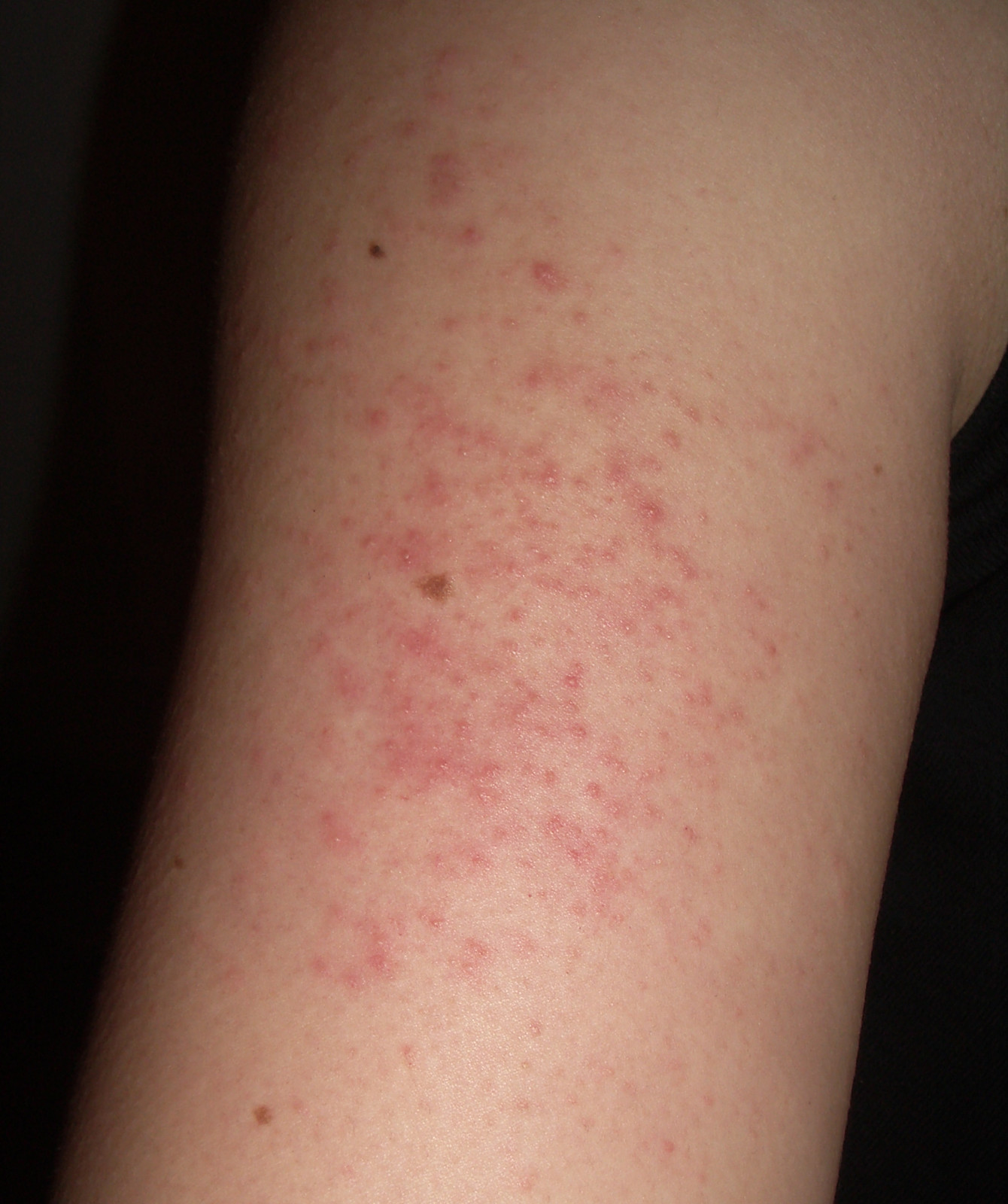
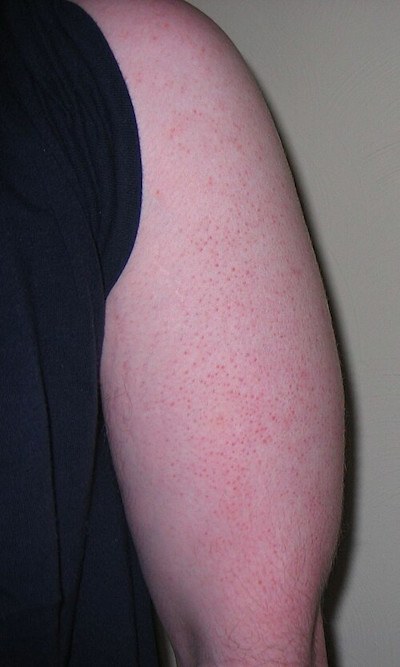
How is keratosis pilaris diagnosed?
There are no tests for keratosis pilaris. You don't need to see a doctor but, if you do, then they will diagnose keratosis pilaris by looking at it.
Treatment of keratosis pilaris
Keratosis pilaris is not harmful. It does not need to be treated. It often gets better in warmer weather and worse in colder weather.
However, some people find that keratosis pilaris makes them feel self-conscious and they want to try and reduce the appearance of it. Although keratosis pilaris can't be cured, there are some treatments which can help.
Some things that can help the appearance of keratosis pilaris include:
Using emollients or moisturisers regularly to try and soften the skin (but avoid scented products).
Using creams that contain urea, salicylic acid, or lactic acid to try and flatten the bumps.
Using exfoliating pads or mittens.
Having lukewarm showers and avoiding hot baths.
Using a humidifier in winter to stop your skin drying out.
Laser treatment has been shown to be beneficial but is not available on the NHS.
Treatments that have नहीं been shown to help include:
Expensive cosmetics which are sold specifically to help with keratosis pilaris.
Vitamin creams.
Scratching or picking at your skin can make keratosis pilaris worse.
How long does it take for keratosis pilaris to get better?
When the treatments above work, it usually takes around six to eight weeks for the skin to start improving. However, even without treatments, it usually gets better with time and is usually much better after the age of 30.
Explore moisturisers for dry skin
Get expert healthcare advice from the comfort of home. Complete a quick online consultation, available 24/7, with your request reviewed by a UK-registered clinician. Next day delivery available on eligible treatments.
रोगी के लिए चयन अन्य त्वचा स्थितियाँ

त्वचा, नाखून और बालों का स्वास्थ्य
हाइड्राडेनाइटिस सपुराटिवा
हाइड्राडेनाइटिस सपुराटिवा एक दीर्घकालिक (क्रोनिक) त्वचा की स्थिति है जो दर्दनाक और बार-बार मवाद के गांठों (फोड़े या फुंसियों) का कारण बनती है। इसका सटीक कारण अज्ञात है। सपुरेशन का मतलब मवाद का निर्माण या निर्वहन होता है। ये क्षेत्र (आमतौर पर बगल और कमर) मवाद रिसते हैं और ठीक होने में कठिनाई होती है। अंततः, निशान बन जाते हैं। उपचारों में एंटीबायोटिक लोशन या दवाएं शामिल हैं, या प्रभावित त्वचा क्षेत्र को हटाने के लिए एक ऑपरेशन। एक नया उपचार शरीर में सूजन का कारण बनने वाले प्रतिरक्षा प्रणाली के एक रासायनिक को अवरुद्ध करके काम करता है।.
डॉ. कॉलिन टिडी, MRCGP द्वारा

त्वचा, नाखून और बालों का स्वास्थ्य
शीतदंश
फ्रॉस्टबाइट एक चोट है जो शरीर के हिस्सों के ठंड के संपर्क में आने से होती है। फ्रॉस्टबाइट के विभिन्न स्तर होते हैं। सतही फ्रॉस्टबाइट में, त्वचा त्वरित उपचार से पूरी तरह से ठीक हो सकती है। हालांकि, अगर फ्रॉस्टबाइट गहरा है, तो ऊतक क्षति स्थायी हो सकती है और ऊतक हानि हो सकती है। फ्रॉस्टबाइट को रोकने का सबसे महत्वपूर्ण तरीका ठंड से बाहर निकलना है। यदि आप ठंड के संपर्क में हैं, तो सुनिश्चित करें कि आपके पास पर्याप्त सुरक्षात्मक कपड़े हैं।.
डॉ. टोनी हैज़ल, FRCGP द्वारा
अधिक पठन और संदर्भ
- केराटोसिस पिलारिस; ब्रिटिश एसोसिएशन ऑफ डर्मेटोलॉजिस्ट्स
- केराटोसिस पिलारिस; डर्मनेट
लेखक के बारे मेंपूरा जीवन परिचय देखें
द्वारा लिखित

Dr Philippa Vincent, MRCGP
सामान्य चिकित्सक, चिकित्सा लेखक
MB BS, Bsc, MRCGP (2000), DCH, DFSRH, DRCOG
डॉ Philippa विन्सेंट उत्तरी लंदन में एनएचएस जीपी के रूप में काम कर रहे हैं।.
समीक्षक के बारे मेंपूरा जीवन परिचय देखें

Dr Toni Hazell, FRCGP
MBBS, BSc, FRCGP, DFSRH, Dip GU med, DRCOG, DCH (London, UK, 2000)
डॉ. टोनी हैज़ल ने सेंट मैरीज़ हॉस्पिटल मेडिकल स्कूल से योग्यता प्राप्त की और नॉर्थविक पार्क हॉस्पिटल में अपनी वीटीएस की।.
लेख का इतिहास
लेख इन भाषाओं में भी उपलब्ध है अंग्रेज़ी, जर्मन, स्पेनिश, फ्रेंच, इतालवी, पुर्तगाली, हिंदी, हिब्रू, अरबी, और स्वीडिश.
Next review due: 2 Feb 2031
3 Aug 2026 | मूल रूप से प्रकाशित
द्वारा लिखित:
Dr Philippa Vincent, MRCGPद्वारा सहकर्मी समीक्षा की गई
Dr Toni Hazell, FRCGP
हमारे में दूसरों के साथ अपने विचार या अनुभव साझा करें रोगी समुदायों.
ऑनलाइन विश्वसनीय उपचार और स्वास्थ्य सेवाओं तक सरल पहुंच।.
Common conditions
Get help with common conditions through the NHS, without a GP appointment.





पेशेंट न्यूज़लेटर के लिए साइन अप करें
आपकी साप्ताहिक खुराक स्पष्ट, विश्वसनीय स्वास्थ्य सलाह की - जो आपको सूचित, आत्मविश्वासी और नियंत्रण में महसूस करने में मदद करने के लिए लिखी गई है।.
सदस्यता लेने पर आप हमारी स्वीकार करते हैं गोपनीयता नीति. आप किसी भी समय सदस्यता समाप्त कर सकते हैं। हम कभी भी आपका डेटा नहीं बेचते।.