सर्जिकल ड्रेन्स
द्वारा सहकर्मी समीक्षा की गई Dr Hayley Willacy, FRCGP द्वारा अंतिम अपडेट डॉ राचेल हडसन, एमआरसीजीपीअंतिम अद्यतन 11 Feb 2023
मरीज की संपादकीय दिशानिर्देशों
- डाउनलोडडाउनलोड
- साझा करें
- Language
- चर्चा
- ऑडियो संस्करण
- Google पर पसंदीदा स्रोतों में जोड़ें
A surgical drain is a small plastic tube that is sometimes used after an operation. It is put inside you during the surgery by the doctor and will stick out of your body until it is removed, usually a few days later. It connects to a small plastic bag that collects any fluid or air that has drained away from where you had the operation. Not all operations require a drain to be in: your surgeon will advise you if one is necessary.
एक नजर में
A surgical drain is a small tube to help drain fluid or air after an operation.
They are usually small, flexible plastic tubes placed during surgery.
Drains can help prevent fluid build-up, pain, infection, and problems with healing.
They are not usually painful but may restrict movement.
Drains usually stay in for a few days until fluid production reduces.
What is a surgical drain?
Surgeons use small plastic tubes to help drain away fluid after an operation: without them the fluid might gather up and cause infection. Or, in the case of an operation on the lungs or chest, air might gather up and squash the lungs.
They are usually special small, flexible plastic tubes which the surgeon places during the operation and then leaves poking out your skin, attached to a small bag.
This is an example of a drain coming out of someone's leg:
Surgical drain
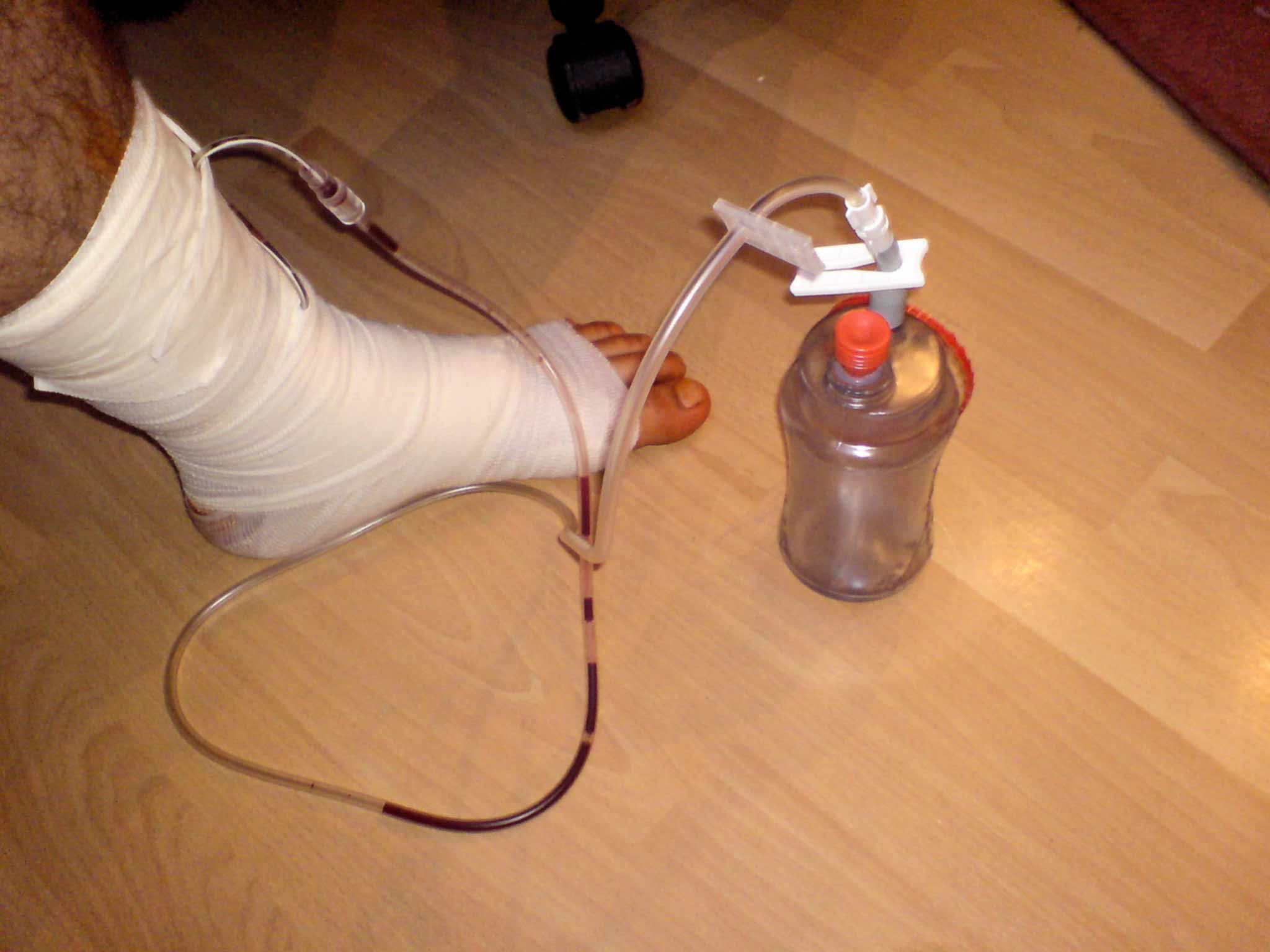
© ChristianKazur, Public domain, via Wikimedia Commons
Although they look a bit gruesome, they aren't usually painful.
Here's an example of a surgical drain after hand surgery:
Hand surgical drain
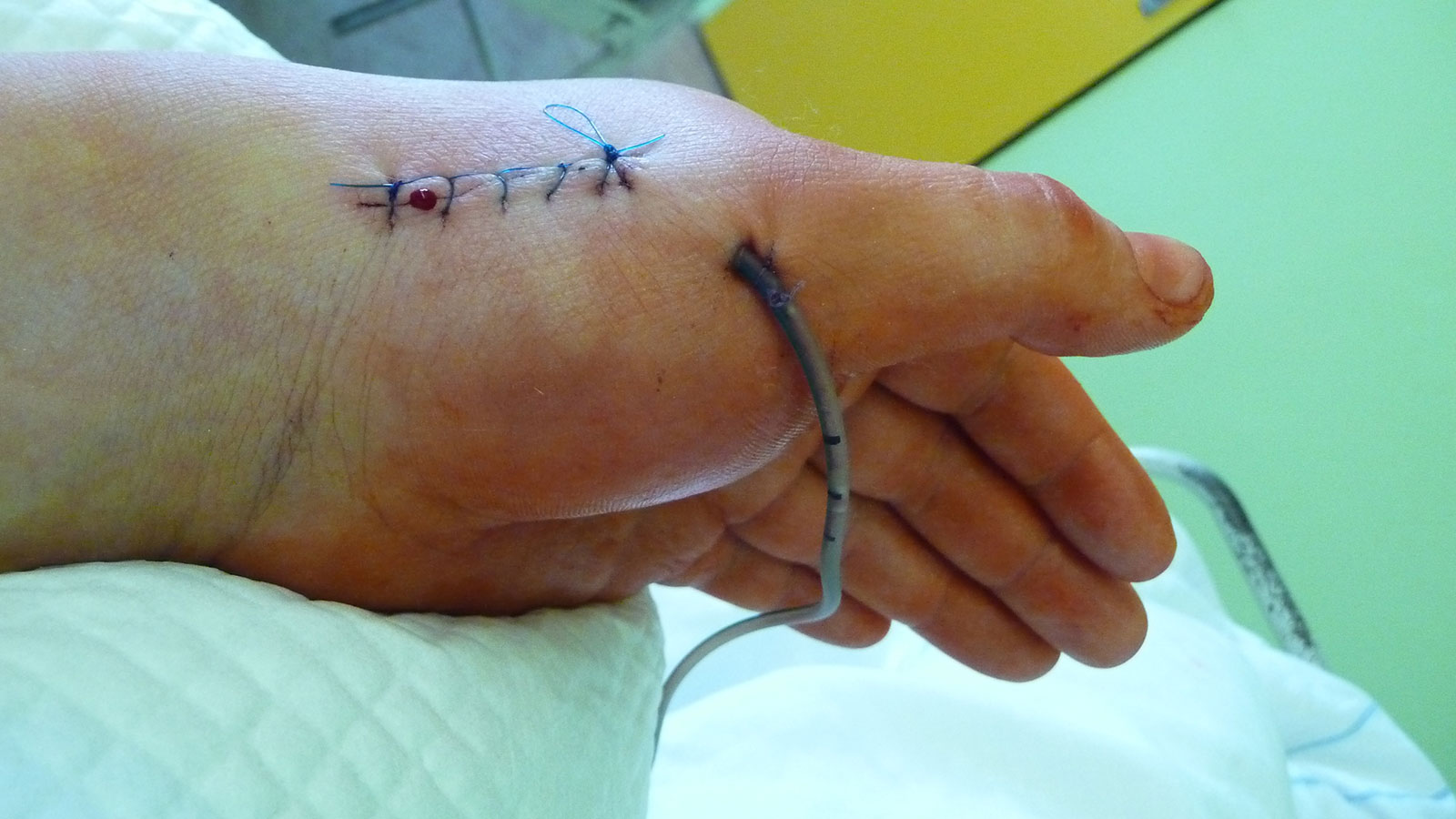
© Pavel Ševela, CC BY-SA 3.0,viaWikimedia Commons
How useful are surgical drains?
Some operations involve quite 'juicy' parts of the body: areas where the body usually makes lots of fluid or juices. An example would be surgery on someone's armpit (axilla): this is often done as part of breast cancer surgery. The armpit makes a lot of fluid after being operated on. Without a drain, the fluid might gather up in a large pool and be painful.
The pressure of the fluid inside might stop the wound healing properly. So the surgical drain allows extra fluid to drain off harmlessly.
If you have had to have an emergency operation - for example, for a burst digestive tract (what doctors would call a perforated bowel) - then there can be infected juices left behind inside you. A surgical drain allows those juices to drain away and hopefully reduce the chances of getting an infection after the operation.
How long do surgical drains stay in for?
Surgical drains usually stay in the body for a few days after an operation. When the fluid production has faded away, the drain can be removed painlessly.
Are there any drawbacks to surgical drains?
There are differences of opinion between surgeons as to whether surgical drains are always needed. Some studies have shown that they don't necessarily allow things to heal any faster. Other drawbacks include:
They can cause problems like infection around where the drain comes out; or they can interfere with things healing inside your body.
They can keep you in hospital longer.
Sometimes they can stop you moving around as much as you'd like, particularly if you have a drain from your chest area.
If they are left in for too long accidentally, they can be difficult to pull out and may leave a small tract which will take a while to heal up.
Which operations require a surgical drain to be fitted?
Operations around the neck, including on the thyroid gland.
Operations on the armpit (axilla).
Operations done in an emergency for something which has ruptured inside you.
Some types of brain surgery.
Operations on the stomach (the drain often then comes out your nose and is called a 'nasogastric tube').
Operations on the bladder (the drain then usually comes out the urine tube and is called a 'urinary catheter').
Your surgeon will discuss with you before the operation whether you will need a surgical drain and where it will be.
रोगी के लिए चयन सामान्य सर्जरी और प्रक्रियाएँ

सर्जरी और प्रक्रियाएँ
महिला नसबंदी
Female sterilisation is a method of contraception. It is a procedure carried out to prevent eggs from reaching sperm.
डॉ. टोनी हैज़ल, FRCGP द्वारा

सर्जरी और प्रक्रियाएँ
घुटने का प्रत्यारोपण
घुटने का प्रत्यारोपण घुटने के जोड़ के क्षतिग्रस्त हिस्सों को बदलने के लिए एक ऑपरेशन है। यह या तो पूर्ण घुटना प्रत्यारोपण (टीकेआर) हो सकता है या आंशिक (एकल-खंडीय) घुटना प्रत्यारोपण। जोड़ के नए हिस्से को कृत्रिम अंग कहा जाता है।.
डॉ. फिलिपा विंसेंट, MRCGP द्वारा
अक्सर पूछे जाने वाले प्रश्न
Do surgical drains always work effectively to prevent complications?
There are different opinions among surgeons regarding the consistent need for surgical drains. Some research indicates that they don't necessarily speed up the healing process. While they are designed to prevent fluid build-up and infection, their effectiveness can vary.
Can surgical drains limit my movement after surgery?
Yes, surgical drains can sometimes restrict your movement, especially if the drain is located in your chest area. This might prevent you from moving around as freely as you would like during your recovery period.
What happens if a surgical drain is left in for too long?
If a surgical drain is accidentally left in for an excessive period, it can become difficult to remove. Additionally, it might leave behind a small tract or tunnel in the skin that will take some time to heal completely after the drain is taken out.
Will having a surgical drain mean I have to stay in hospital for longer?
One of the potential drawbacks of having a surgical drain is that it can lead to a longer stay in the hospital. The drain usually remains in place until fluid production significantly decreases, which can extend the recovery time needed before discharge.
Are there different types of surgical drains, like ones that come out of the nose or urine tube?
Yes, while many surgical drains are small plastic tubes coming out of the skin, there are other types. For operations on the stomach, a drain might come out of your nose and is called a 'nasogastric tube'. For bladder operations, a drain usually comes out through the urine tube and is known as a 'urinary catheter'.
अधिक पठन और संदर्भ
- Makama JG, Ameh EA; Surgical drains: what the resident needs to know. Niger J Med. 2008 Jul-Aug;17(3):244-50.
लेखक के बारे मेंपूरा जीवन परिचय देखें

Dr Oliver Starr, MRCGP
MBChB, BMedSc, MRCS, MRCGP, DRCOG
Dr Oliver Starr is a general practitioner in Hertfordshire and an undergraduate tutor at University College Medical School.
समीक्षक के बारे मेंपूरा जीवन परिचय देखें

Dr Hayley Willacy, FRCGP
सामान्य चिकित्सक, चिकित्सा लेखक
MBChB (1992), DRCOG, DFFP, MRCOG (Part 1) MRCGP (2007), DFSRH (2013), MSc - medical education (2020)
डॉ हेले विलासी एक एनएचएस जीपी थीं जो उत्तर पश्चिम इंग्लैंड में काम कर रही थीं, जिन्होंने 30 वर्षों के बाद 2022 में नैदानिक अभ्यास से सेवानिवृत्ति ली।.
लेख का इतिहास
इस पृष्ठ पर दी गई जानकारी योग्य चिकित्सकों द्वारा लिखी और सहकर्मी समीक्षा की गई है।.
लेख इन भाषाओं में भी उपलब्ध है अंग्रेज़ी, जर्मन, स्पेनिश, फ्रेंच, इतालवी, पुर्तगाली, हिंदी, हिब्रू, अरबी, और स्वीडिश.
Next review due: 10 Feb 2028
11 Feb 2023 | नवीनतम संस्करण
18 अक्टूबर 2017 | मूल रूप से प्रकाशित
द्वारा लिखित:
Dr Oliver Starr, MRCGP

पूछें, साझा करें, जुड़ें।.
चर्चाओं को ब्राउज़ करें, प्रश्न पूछें, और सैकड़ों स्वास्थ्य विषयों पर अनुभव साझा करें।.

अस्वस्थ महसूस कर रहे हैं?
अपने लक्षणों का ऑनलाइन मुफ्त में मूल्यांकन करें
पेशेंट न्यूज़लेटर के लिए साइन अप करें
आपकी साप्ताहिक खुराक स्पष्ट, विश्वसनीय स्वास्थ्य सलाह की - जो आपको सूचित, आत्मविश्वासी और नियंत्रण में महसूस करने में मदद करने के लिए लिखी गई है।.
सदस्यता लेने पर आप हमारी स्वीकार करते हैं गोपनीयता नीति. आप किसी भी समय सदस्यता समाप्त कर सकते हैं। हम कभी भी आपका डेटा नहीं बेचते।.
सर्जरी और प्रक्रियाओं में अधिक
- बोटॉक्स
- ब्रोंकोस्कोपी
- सामान्य ऑपरेशन के बाद की जटिलताएँ
- कोरोनरी आर्टरी बाईपास ग्राफ्ट
- सिस्टोस्कोपी
- ERCP
- चेहरे की सर्जरी
- गैस्ट्रोस्कोपी
- कूल्हे का प्रत्यारोपण
- हिस्टेरोस्कोपी
- किडनी बायोप्सी
- किडनी प्रत्यारोपण
- घुटने का प्रत्यारोपण
- लेज़र हेयर रिमूवल
- आपकी आंख के ऑपरेशन के लिए स्थानीय एनेस्थीसिया
- नाक की कमी की सर्जरी (राइनोप्लास्टी)
- सिग्मोइडोस्कोपी
- नसबंदी
- नसबंदी
- वीडियो-सहायता प्राप्त थोराकोस्कोपिक सर्जरी