
Does BMI matter?
Peer reviewed by Dr Colin Tidy, MRCGPLast updated by Dr Sarah JarvisLast updated 5 Aug 2020
Meets Patient’s editorial guidelines
- DownloadDownload
- Share
- Language
- Discussion
- Audio Version
- Add to preferred sources on Google
It's hard to open a newspaper these days without seeing shock statistics on the number of people in the UK who are overweight or obese. Sadly, they're not an exaggeration - the number of people classifies as 'obese' has doubled in about 25 years in the UK.

Today more than 2 in 3 adults are overweight or obese. But how do doctors decide what category you fall into, and what does it mean for your health?
Categories for weight in the UK are mostly measured using a calculator for your body mass index (BMI). This looks at your weight and height and comes up with a number. It divides the result into several categories depending on the number - a BMI of 18.5-24.9 is in the 'ideal' range; under 18.5 is underweight; 25-29.9 is overweight; 30+ is obese. Doctors also use a category called 'morbid obesity' for patients with a BMI over 40 - by the time you reach this category, it's highly likely your weight is having a significant impact on your health.
The health risks of obesity
The rationale for calling out the weight of people who aren't classified as obese is that even being overweight can affect your health. For instance, type 2 diabetes affects at least 1 in 20 adults in the UK and the number affected is rising all the time. If not well controlled, it can damage your eyes, kidneys, nerves and heart. Being in the overweight compared to the ideal category of BMI significantly increases your risk of type 2 diabetes. The higher your BMI, the more likely you are to develop it, especially if it runs in your family.
Being overweight also puts strain on your joints. Osteoarthritis, the most common kind of joint problem in the UK, affects 8.5 million adults. The big weight-bearing joints (hips and knees) as well as the spine are the most common sites. The higher your weight, the more pressure you put them under and the more likely you are to develop osteoarthritis. If you end up needing a joint replacement, success rates are lower and complication rates are higher if you're overweight or obese.
Other health problems linked with being overweight include high blood pressure; heart attack and stroke; obstructive sleep apnoea (where your airways close down when you're asleep, leading to poor sleep quality and tiredness); heartburn; gout and stress incontinence.
How useful is BMI?
BMI isn't accurate in every situation. What we're really trying to measure is body fat - too much is the major cause of health problems where weight is concerned. The BMI calculator uses an approximation of the amount of muscle compared to fat in your body. Because muscle is more dense than fat, people who are extremely fit may have a BMI in the overweight range despite being very healthy. As you get older, your muscle mass tends to drop and the proportion of fat in your body rises - that means it may underestimate the BMI of over-65s.
People of South Asian origin have been dealt a bad hand where body fat is concerned. Fat deep inside your tummy is more dangerous for your health than fat under the skin on your hips, thighs etc. That means even if two people have the same BMI, the one with an 'apple' rather than a 'pear' shape is more unhealthy. People of South Asian origin tend to accumulate weight in their tummies, so for them even a BMI of 23-25 counts as being overweight from a health perspective.
What can I do?
Your practice nurse will be happy to check your BMI and can give useful advice on losing weight. They may be able to refer you to a local NHS service - these vary around the country and range from individual sessions with a dietician to group classes.
In some areas you can access 'exercise on prescription', such as free entry to local authority gym classes. Exercise is great for toning muscle, improving the ratio of muscle to fat in your body and strengthening your heart and bones, protecting against osteoporosis. However, to lose significant amounts of weight, you'll need to adjust your diet as well.
Weight loss surgery is reserved for people with a BMI over 35 or 40, depending where you live. It's not an easy option.
The good news is that you don't need to shed several stone for your health to benefit. In fact, losing just a few pounds can cut your risk of heart attack, stroke and type 2 diabetes. For most people, the most effective way to lose weight long-term is to take a slow and steady approach, aiming to take off 1-3 pounds a week.
With thanks to My Weekly magazine, where this article was originally published.
Patient picks for Obesity and weight loss
Healthy living
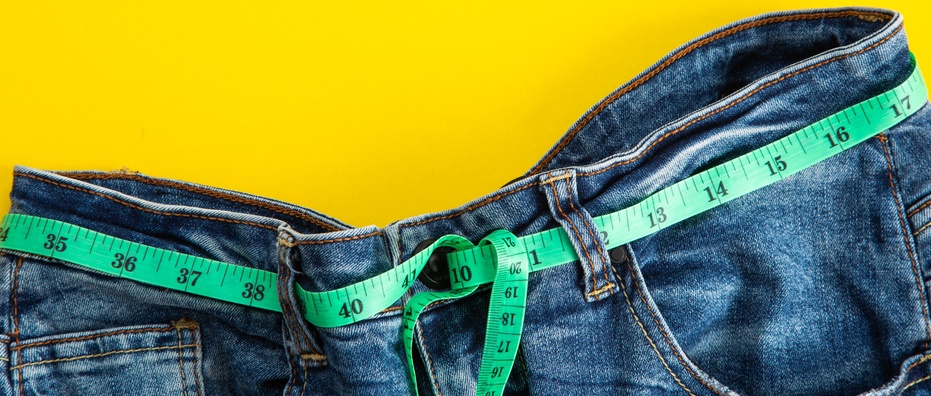
What your waist measurement says about your health
We all know that if we consume excess calories and don't burn them off, our body stores them as fat. Many of us are also aware of our trouble spots - perhaps we're prone to gaining weight on our thighs, or around our middle. A little extra weight may not be harmful to your health, so how do you know if you're still in a healthy zone?
by Lynn Stephen

Healthy living
Can you blame your weight on your genes?
It's said 'you are what you eat'. But why can some people eat whatever they like without putting on a pound, while others have to watch every morsel they put into their mouth and count each calorie they consume?
by Kerry Taylor-Smith
Frequently asked questions
What is 'morbid obesity' and how is it defined?
Morbid obesity is a category used for patients with a Body Mass Index (BMI) over 40. When someone reaches this category, it's highly probable that their weight is having a significant negative impact on their health.
What other health conditions are linked to being overweight?
Besides type 2 diabetes and osteoarthritis, being overweight is also linked to high blood pressure, increased risk of heart attack and stroke, obstructive sleep apnoea (which disrupts sleep), heartburn, gout, and stress incontinence.
Why is the accuracy of BMI sometimes limited, especially for older adults or very fit people?
BMI approximates body fat, which is the main concern for health. However, muscle is denser than fat. This means very fit people with high muscle mass might have an 'overweight' BMI despite being healthy. Conversely, as people age, muscle mass tends to decrease while body fat proportion rises, which can lead to an underestimation of their BMI.
Are there NHS services available to help with weight loss?
Yes, your practice nurse can provide advice on losing weight and may be able to refer you to local NHS services. These services vary across the country and can include individual sessions with a dietician or group classes.
Is exercise alone enough to lose a lot of weight?
While exercise is excellent for toning muscles, improving the muscle-to-fat ratio, and strengthening your heart and bones, significant weight loss typically requires adjusting your diet as well.
About the authorView full bio

Dr Sarah Jarvis
Clinical Consultant
MA (Cantab), BM, BCh (Oxon), DRCOG, FRCGP, MBE
After training in medicine at Cambridge and Oxford, Dr Sarah Jarvis MBE became a GP.
About the reviewerView full bio

Dr Colin Tidy, MRCGP
General Practitioner, Medical Author
MBBS, MRCGP, MRCP (Paediatrics), DCH
Dr Colin Tidy is an NHS Doctor, based in Oxfordshire.
Article history
The information on this page is peer reviewed by qualified clinicians.
Article also available in English, German, Spanish, French, Italian, Portuguese, Hindi, Hebrew, Arabic, and Swedish.
5 Aug 2020 | Latest version
Join the conversation
Share your thoughts or experiences with others in our patient communities.

Ask, share, connect.
Browse discussions, ask questions, and share experiences across hundreds of health topics.

Feeling unwell?
Assess your symptoms online for free
Sign up to the Patient newsletter
Your weekly dose of clear, trustworthy health advice - written to help you feel informed, confident and in control.
By subscribing you accept our Privacy Policy. You can unsubscribe at any time. We never sell your data.
More in healthy living
- NewAdam Smith on mindfulness, mental health, and diabetes
- Are dance workouts good for keeping fit?
- Can antidepressants cause vivid dreams?
- Diabetes burnout - how mindfulness can support your mental wellbeing
- Good sleep matters: it isn't just about clocking hours
- How to be happy: 12 everyday tips
- How to look after your mental health at university
- How to stop snoring ruining your sleep
- How to talk to your child about their weight
- How to talk to your kids about sex, porn and healthy relationships
- Is the vagus nerve the key to our mental health?
- One in five hospital patients have a problem with alcohol
- Should you take Champix to help you stop smoking?
- The best ways to quit smoking for good
- The health benefits of stretching every day
- Video: Glute strengthening exercises
- What are the dangers of drinking in hot weather?
- What does it mean to be intersex?
- What harm can conversion therapy cause and why isn't it banned?
- What you need to know about parenting with a mental health issue