Heart palpitations
Bradycardia, tachycardia
Peer reviewed by Dr Toni Hazell, FRCGPLast updated by Dr Hayley Willacy, FRCGP Last updated 30 Jan 2023
Meets Patient’s editorial guidelines
- DownloadDownload
- Share
- Language
- Discussion
- Audio Version
- Add to preferred sources on Google
In this series:BradycardiaAbnormal heart rhythmsWolff-Parkinson-White syndromeSupraventricular tachycardia
Heart palpitations are the sensation of your heart beating and are common. Most cases are harmless. They usually only last for a short time and can be accompanied by other symptoms such as breathlessness, dizziness, chest tightness and a feeling of anxiety. Palpitations that are severe or don't settle quickly may need urgent medical attention. The most common causes are mentioned below.
At a glance
Heart palpitations are feelings of a rapid, thumping, or fluttering heart.
They are a symptom, not a diagnosis, where you become aware of your heart beating.
Common causes include stress, exercise, caffeine, and certain medications.
See a GP if palpitations do not make you feel unwell but settle on their own.
Call an ambulance if palpitations don't go away quickly, or you have chest pain, severe breathlessness, or feel faint.
What are heart palpitations?
Heart palpitations are rapid, thumping or fluttering feelings that people experience in their chest. They may be on the left-hand side or the middle of the chest. Normally we are not aware of our heart beating. The term 'palpitations' is used when we are aware of our heart beating. Some people say heart palpitations feel like their heart is racing; others say their chest hurts, thumps or flutters or like their heart is skipping a beat. Usually this sensation is caused by a heart rate that is faster than usual for your age, gender and level of fitness.
'Palpitations' are a symptom, not a diagnosis. The important task for your healthcare professional is to work out what is causing them. Occasionally, the feeling is due to a heart rhythm problem. See the leaflet Anatomy of the heart for more information about the heart.
When to worry about heart palpitations
Occasionally, heart palpitations can be serious. In the following situations, you should call an ambulance:
If you have palpitations that do not go away quickly (within a few minutes).
If you have any chest pain with palpitations.
If you have severe breathlessness with palpitations.
If you pass out, or feel as if you are going to pass out, or feel dizzy.
If you have palpitations and have had heart conditions and problems such as heart failure in the past.
If you have palpitations which began as you were exercising.
If the palpitations do not make you feel unwell, and settle on their own, you should see your GP. Keep a diary of when they happen and how long they last, as this information will help your GP.
If you have an episode of heart palpitations it can be useful to check your pulse. In particular it may be useful for your doctor to know how fast your pulse was during the episode. That is, how many beats per minute; also, if your pulse felt regular or irregular. This information can help identify the cause of the palpitations. Your practice nurse can show you how to take your own pulse. Or you can follow the steps shown on the British Heart Foundation website, given in 'Further reading & references' at the end of this leaflet.
What causes heart palpitations?
This list does not include all the possible causes of heart palpitations but lists some of the more common causes, including:
A fast but regular heartbeat (sinus tachycardia)
There are many reasons why the heart rate can be faster than normal. Some of these are:
Exercise.
Intake of caffeine.
Certain medications.
Other stimulant drugs, including some recreational drugs.
A serious underlying abnormality of the heart is a rare cause of sinus tachycardia. Treatment will depend on the underlying reason for the fast heart rate.
Slow heart rate (bradycardia)
Read more about bradycardia.
Abnormal heart rhythms (arrhythmias)
Read more about abnormal heart rhythms (arrhythmias).
Diagnosing heart palpitations
You are likely to be asked about your intake of the substances mentioned above and the circumstances in which the heart palpitations occur. Your doctor will take your pulse and blood pressure, listen to your heart and order further tests as appropriate. Initial investigations for heart palpitations include:
Blood tests to check for anaemia and an overactive thyroid gland.
Electrocardiogram (ECG) to record the electrical impulses of your heart to check whether the heart rate is regular, and of normal rate. It also looks for underlying or previous heart disease.
Ambulatory ECG: this is an ECG that records your heart as you carry on your normal life over 24 or 48 hours. You will be asked to make a note of when you get the palpitations. The reading will then show what your heart was doing when you felt the palpitations.
In some cases you may need an ultrasound scan of the heart (an echocardiogram, or 'echo').
In other cases, you may need a test of your heart while you exercise.
Electrophysiology tests may also be used. Small wires (electrodes) are inserted into your heart via one of your veins. These wires measure the electrical signals in your heart and can determine where any abnormal electrical signals are coming from.
All these tests are to make sure there is no abnormality in your heart causing the heart palpitations. However in many cases, palpitations are NOT caused by any problem with your heart.
How to treat heart palpitations
Treatment will depend on the likely cause of your palpitations. If, for example, your palpitations are caused by drinking too much caffeine, you will be advised to cut down how much caffeine you drink. If your palpitations are caused by anxiety, your GP will discuss ways of managing this.
Some cases of palpitations are managed by a GP; other cases may be referred to a heart specialist (cardiologist). In either case, the treatment you will be given depends on the cause that has been found.
Patient picks for Heart palpitations
Heart health and blood vessels
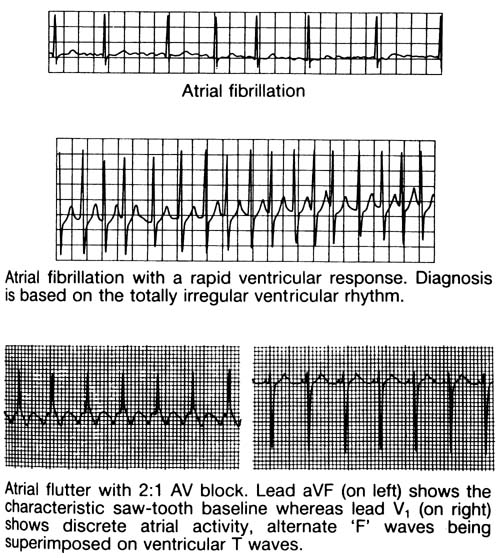
Atrial fibrillation
Atrial fibrillation (AF) is an abnormal fast irregular heartbeat. An abnormal heartbeat rhythm is called an arrhythmia. A normal heart rate is between 60 and 100 beats a minute (bpm) when you're resting. In AF the heart rate can sometimes be very fast (often between 140 and 180 bpm) as well as being irregular.
by Dr Doug McKechnie, MRCGP
Heart health and blood vessels
Postural tachycardia syndrome
Postural tachycardia syndrome (PoTS) is an abnormal response of your body when you are upright (usually when standing). Your heart rate increases too much after getting up from lying or sitting down. It is caused by a problem with the nervous system which controls the autonomic functions in the body. This part of the nervous system is called the autonomic nervous system. The symptoms of PoTS occur when you are upright and are relieved when lying down. These symptoms are associated with an abnormally high and persistent increase in heart rate within ten minutes of standing. Lifestyle adjustments are usually very effective for the treatment of PoTS but some people with PoTS need medication to control the symptoms. The outcome (prognosis) is very good for most people with PoTS but some may have severe long-term difficulties with normal daily activities.
by Dr Rosalyn Adleman, MRCGP
Frequently asked questions
What is the difference between heart palpitations and a normal awareness of my heartbeat?
Normally, we are not consciously aware of our heart beating. The term 'palpitations' is used specifically when you become aware of your heart beating, often experiencing it as a rapid, thumping, or fluttering sensation in your chest.
Can certain medications cause heart palpitations?
Yes, some medications can be a cause of heart palpitations, specifically by leading to a fast but regular heartbeat known as sinus tachycardia. If you suspect a medication is causing your palpitations, your doctor will consider this as part of their assessment.
How can doctors determine if my heart palpitations are serious or not?
Doctors will ask about your symptoms and when they occur, then perform a physical examination including checking your pulse and blood pressure, and listening to your heart. They may also order various tests such as blood tests, an electrocardiogram (ECG), or an ambulatory ECG to monitor your heart over a period. In some cases, more specialised tests like an ultrasound of the heart or electrophysiology tests might be used to identify the cause.
What information should I record about my palpitations to help my GP?
It is helpful to keep a diary of when your palpitations happen, how long they last, and what you were doing at the time. If possible, also note down how fast your pulse was during the episode and whether it felt regular or irregular. This information can assist your GP in identifying the cause.
Are heart palpitations always a sign of a heart problem?
No, heart palpitations are not always a sign of a heart problem. While they can sometimes be due to an underlying heart issue, many cases are not caused by any abnormality with the heart itself. They can be triggered by various factors like stress, caffeine, certain medications, or other conditions such as an overactive thyroid.
Further reading and references
- Checking your pulse; British Heart Foundation
- European Society of Cardiology; Guidelines for Management of Atrial Fibrillation, 2020
- Palpitations; NICE CKS, February 2026 (UK access only)
- Brugada J, Katritsis DG, Arbelo E, et al; 2019 ESC Guidelines for the management of patients with supraventricular tachycardia. The Task Force for the management of patients with supraventricular tachycardia of the European Society of Cardiology (ESC). Eur Heart J. 2020 Feb 1;41(5):655-720. doi: 10.1093/eurheartj/ehz467.
- Govender I, Nashed KK, Rangiah S, et al; Palpitations: Evaluation and management by primary care practitioners. S Afr Fam Pract (2004). 2022 Feb 24;64(1):e1-e8. doi: 10.4102/safp.v64i1.5449.
About the author

Dr Ann Robinson, MRCGP
MBBS, DFFP, DCH, DRCOG, MRCGP
About the reviewerView full bio

Dr Toni Hazell, FRCGP
MBBS, BSc, FRCGP, DFSRH, Dip GU med, DRCOG, DCH (London, UK, 2000)
Dr. Toni Hazell qualified from St. Mary’s Hospital Medical School and did her VTS at Northwick Park Hospital.
Article history
The information on this page is written and peer reviewed by qualified clinicians.
Article also available in English, German, Spanish, French, Italian, Portuguese, Hindi, Hebrew, Arabic, and Swedish.
Next review due: 29 Jan 2028
30 Jan 2023 | Latest version
5 Nov 2012 | Originally published
Authored by:
Dr Ann Robinson, MRCGP
Join the conversation
Share your thoughts or experiences with others in our patient communities.

Ask, share, connect.
Browse discussions, ask questions, and share experiences across hundreds of health topics.

Feeling unwell?
Assess your symptoms online for free
Sign up to the Patient newsletter
Your weekly dose of clear, trustworthy health advice - written to help you feel informed, confident and in control.
By subscribing you accept our Privacy Policy. You can unsubscribe at any time. We never sell your data.
More in heart health and blood vessels
- Alpha-blockers
- Angina
- Aortic regurgitation
- Atrial septal defect
- Bradycardia
- Cardiac catheterisation
- Exercise Tolerance Testing
- Familial hypercholesterolaemia
- Heart attack recovery
- High cholesterol
- Hyperlipidaemia
- Living with high blood pressure
- Mitral regurgitation
- Mitral stenosis
- Osler-Weber-Rendu syndrome
- Peripheral arterial disease
- Pulmonary oedema
- Stroke
- Thiazide diuretics
- Transient ischaemic attack